
How Can Integrated Approaches Control Industrial Air Pollution?
Air pollution has become an economic and operational challenge, especially for India’s manufacturing sector.
As industrial clusters expand and regulations tighten, businesses can no longer treat emissions control as simply a compliance checkbox. A holistic and integrated approach to air pollution is emerging as both a necessity and an opportunity.
In 2023, the Ministry of Environment, Forest and Climate Change (MoEFCC) revised emission norms across several sectors, including thermal power, cement, and chemical manufacturing.
Understanding the Sources
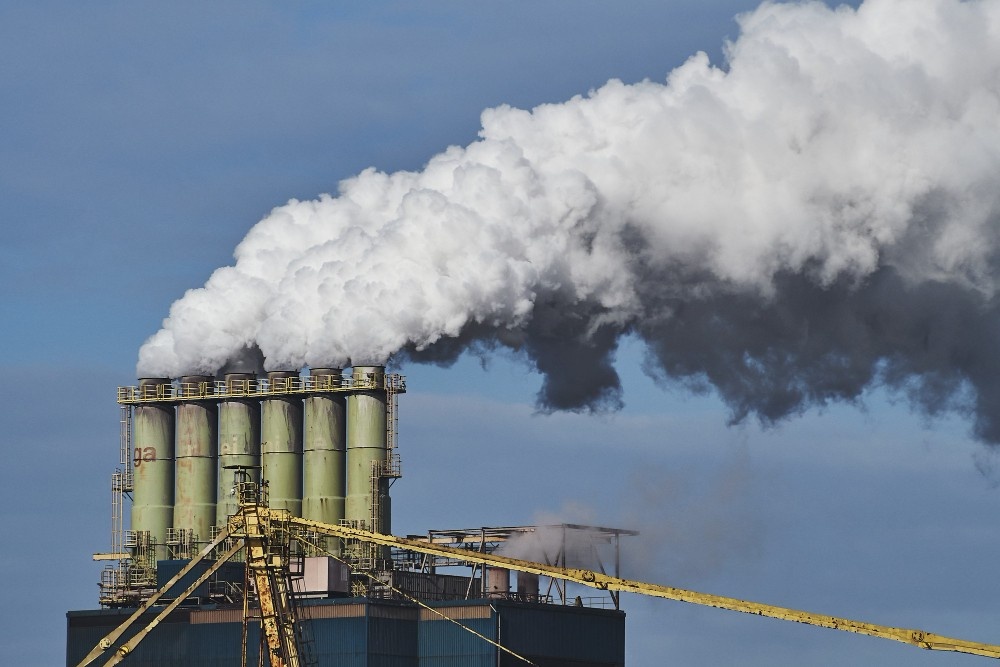
Industrial air pollution isn’t generated from a single point. It originates from:
- Point sources such as stacks, kilns, and boilers
- Fugitive emissions from material handling, dust from roads, or loading bays
- Process-related emissions like volatile organic compounds (VOCs), solvent vapors, or acid fumes
- Energy sources such as diesel generators and coal-based systems
Traditionally, most factories have focused only on stack emissions. But today, fugitive and ambient air quality are gaining equal importance, especially in integrated manufacturing zones and export-oriented industrial parks.
What is an Integrated Approach?
An integrated air pollution strategy doesn’t isolate treatment to one stage or equipment. It combines:
- Source control (e.g., switching to cleaner fuels or raw materials)
- Process optimization (e.g., closed-loop systems, reducing thermal loss)
- End-of-pipe solutions (e.g., scrubbers, electrostatic precipitators)
- Ambient air monitoring (real-time sensors, AQI dashboards)
- Design-led planning (orientation of buildings, green buffer zones)
This integrated view ensures that air quality is managed at every step from plant layout to stack discharge.
Start with the Design Stage
Architectural and master planning decisions play a silent yet significant role.
Simple moves such as orienting high-emission operations downwind from sensitive zones, creating buffer green belts, or zoning of noisy, dust-generating processes can make a measurable impact on surrounding AQI.
Regulatory Push
The National Clean Air Programme (NCAP) has already set reduction targets for PM10 and PM2.5 levels across 131 cities.
CPCB has also launched an Online Continuous Emission Monitoring System (OCEMS) mandate for certain industries, which now must transmit real-time emissions data to regulatory servers.
In 2025, the proposed Environmental Digital Compliance Platform will further integrate air quality reporting with plant performance.
These steps signal a clear shift that pollution control is no longer periodic, but continuous and data-driven.
Practical Technologies for Indian Factories
Indian industries are increasingly adopting both conventional and modern systems:
- Bag filters and ESPs for particulate control in cement, power, and foundry units
- Wet scrubbers in chemical and acid-based plants
- Activated carbon filters and bio-filters for VOC-heavy industries
- Fogging and mist systems to control fugitive dust at construction and mining sites
- Low-NOx burners in process heating systems
More progressive companies are now exploring carbon capture, odour abatement systems, and even indoor air filtration in operator zones.
Role of Data and IoT in Air Pollution Control
IoT-based sensors, when integrated into the plant’s building management system (BMS) or ERP, can provide real-time data on air quality across multiple nodes. This allows:
- Preemptive maintenance of filters
- Alarm-based alerts for emission threshold breaches
- Energy-efficiency benchmarking for exhaust systems
These tools also help with regulatory reporting and provide valuable insight during ESG audits or green certification processes.
Industry Examples Leading the Change
- Sri City (Andhra Pradesh) and Auric City (Maharashtra), two of India’s industrial smart cities, have implemented centralized AQI monitoring towers and emission-linked industrial zoning
- In Gujarat, select chemical zones have deployed shared air pollution control facilities to manage emissions from smaller MSME units
- Several solar panel, EV, and electronics manufacturers are investing in low-emission HVAC systems to meet export compliance and employee health standards
These are signs of a broader shift towards integrated, design-led emission management.
Final Thoughts
Whether you’re setting up a food processing plant or an EV battery facility, emission norms are now tied to project approvals, financing, and even insurance.
Instead of treating air pollution control as a cost center, manufacturers can reframe it as a brand differentiator and value creator. Reduced air leaks improve yield, cleaner processes improve worker retention, and sustainable facilities appeal to global partners.
As India redefines its industrial future, air quality will be a defining marker of progress. Integrated pollution control is something the AEC sector must consider from the blueprint stage itself.