Sustainability is becoming an essential part of manufacturing strategy. Across the world, industries are under growing pressure to reduce carbon emissions, improve energy efficiency, conserve natural resources, and meet Environmental, Social and Governance (ESG) expectations. At the same time, customers, investors, and global supply chains increasingly prefer manufacturers that demonstrate responsible environmental practices.
India is witnessing the same transition. National initiatives such as Make in India, PM Gati Shakti, the National Green Hydrogen Mission, and various state industrial policies are encouraging industries to adopt cleaner and more resource-efficient manufacturing practices.
The Viksit Gujarat Industrial Policy 2026, for example, highlights renewable energy, environmental stewardship, green hydrogen, and sustainable industrial infrastructure as key pillars for future industrial growth.
For manufacturers planning new facilities or expanding existing ones, sustainability now begins long before production starts.
This article explores what green manufacturing means, why it matters today, and how businesses can build future-ready industrial facilities.
Why This Topic Matters Today
Manufacturing is changing rapidly. Companies are no longer evaluated only on production capacity or operational costs. Environmental performance has become equally important.
Some of the major factors driving this shift include:
- Growing demand for low-carbon products.
- Increasing ESG expectations from investors.
- Expansion of renewable energy.
- Stricter environmental regulations.
- Global supply chain sustainability requirements.
According to the Ministry of New and Renewable Energy (MNRE), India is working towards 500 GW of non-fossil fuel capacity by 2030, creating significant opportunities for industries to transition towards cleaner manufacturing.
For manufacturers, sustainability is no longer just about compliance—it is becoming a competitive advantage.
Understanding the Concept
What Is Green Manufacturing?
Green manufacturing refers to designing, constructing, and operating manufacturing facilities in a way that minimizes environmental impact while improving operational efficiency.
It considers the complete lifecycle of a factory from planning and construction to production, maintenance, and future expansion.
Rather than focusing on one environmental initiative, green manufacturing aims to balance productivity, profitability, and sustainability.
Green Manufacturing vs Traditional Manufacturing
| Traditional Manufacturing | Green Manufacturing |
|---|---|
| Focus on production | Focus on production and sustainability |
| Higher energy consumption | Energy-efficient operations |
| Linear resource usage | Resource optimization and recycling |
| Reactive environmental measures | Sustainability integrated during planning |
| Limited renewable energy | Renewable energy integration |
Common Characteristics
Modern green manufacturing facilities generally include:
- Energy-efficient buildings
- Renewable energy integration
- Water conservation systems
- Waste reduction strategies
- Efficient material flow
- Smart utility planning
- Flexible infrastructure for future expansion
How Industrial Policies Are Supporting This Transformation
The manufacturing ecosystem is being strengthened through both national and state-level initiatives.
At the national level, programs like Make in India, PM Gati Shakti, the National Logistics Policy, and the National Green Hydrogen Mission are improving infrastructure, logistics, renewable energy adoption, and industrial competitiveness.
State policies are complementing these efforts by encouraging sustainable industrial development. For example, the Viksit Gujarat Industrial Policy 2026 promotes environmental stewardship, reliable green power, industrial infrastructure, green hydrogen, and future-ready manufacturing ecosystems rather than focusing only on investment incentives.
Together, these initiatives are helping industries build manufacturing facilities that are efficient, globally competitive, and environmentally responsible.
Practical Implications for Manufacturers
Green manufacturing begins at the planning stage. Decisions taken before construction often determine the long-term efficiency of the facility.
Planning the Right Location
Selecting a location with reliable infrastructure, renewable power availability, efficient logistics, and scope for future expansion supports sustainable operations throughout the facility’s lifecycle.
Factory Design Considerations
Building orientation, natural daylight, optimized circulation, and efficient layouts reduce operational costs while improving productivity.
Utilities & Infrastructure
Integrated planning of electrical systems, water supply, drainage, HVAC, and process utilities improves reliability and reduces future modifications.
Renewable Energy Integration
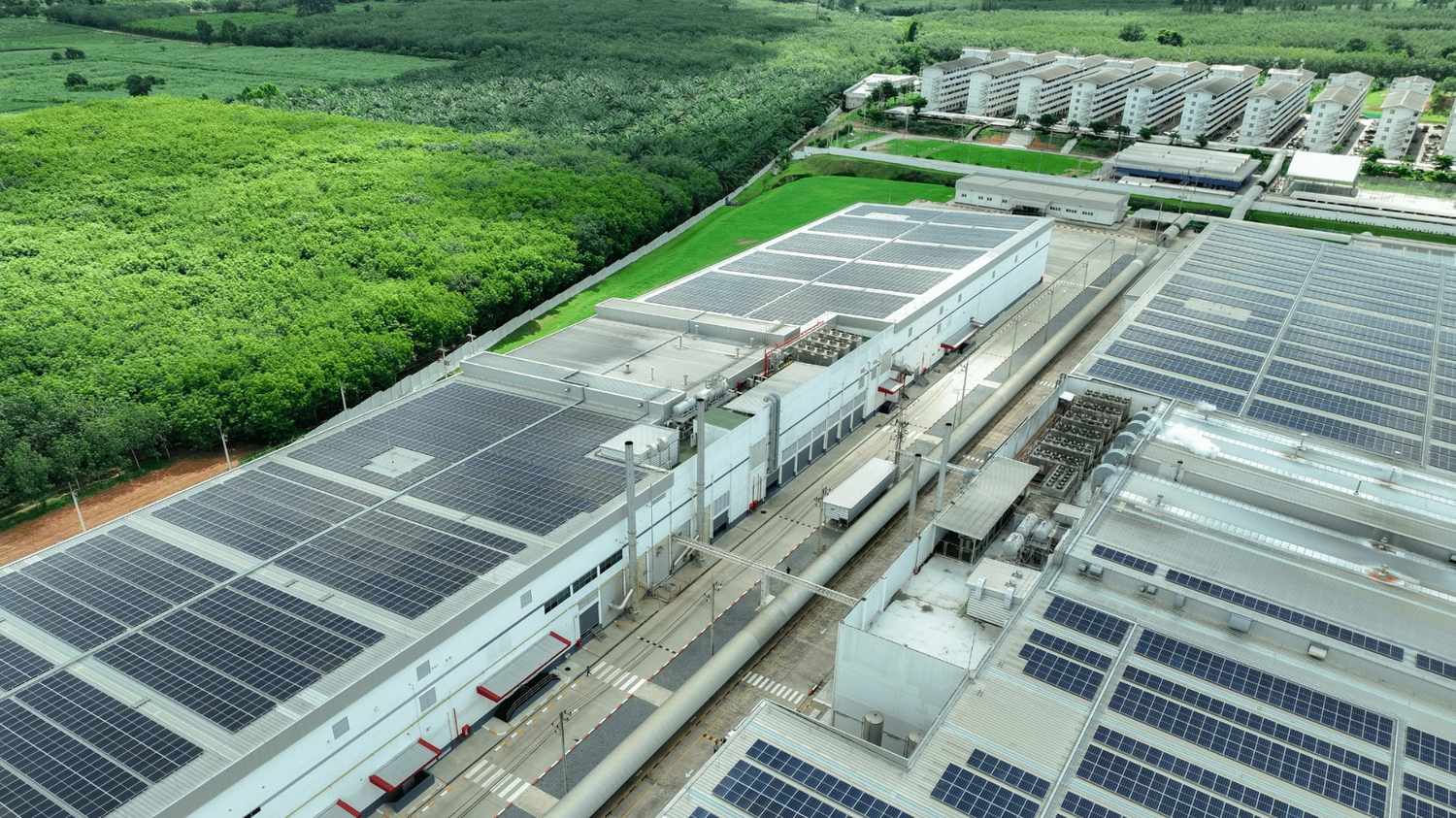
Factories are increasingly incorporating rooftop solar, energy monitoring systems, and provisions for future renewable energy integration.
Planning for Future Expansion
A flexible master plan allows manufacturers to expand production without major disruption to ongoing operations.
At VMS, sustainability is considered from the earliest stages of industrial planning, helping manufacturers build facilities that are efficient, adaptable, and prepared for long-term growth.
Common Challenges While Planning Sustainable Manufacturing Facilities
Although sustainability offers long-term benefits, manufacturers often face practical challenges during implementation.
- Higher Initial Investment: Sustainable infrastructure may require higher upfront costs but often reduces lifecycle expenses.
- Utility Integration: Renewable energy, water recycling, and process utilities require coordinated planning.
- Water Management: Industries need efficient systems for water conservation, recycling, and wastewater treatment.
- Energy Optimization: Achieving energy efficiency requires both good building design and efficient equipment selection.
- Future Flexibility: Facilities should be planned to accommodate changing technologies and production requirements.
Addressing these challenges during the design stage is significantly easier than making changes after operations begin.
Best Practices for Building a Sustainable Factory
Manufacturers can improve sustainability by following a few practical principles:
- Plan sustainability from Day One.
- Optimize site planning and building orientation.
- Integrate renewable energy wherever feasible.
- Design flexible utility corridors.
- Reduce internal transportation distances.
- Adopt water conservation and recycling systems.
- Plan for future expansion.
- Evaluate lifecycle costs instead of only initial investment.
These practices not only improve environmental performance but also enhance operational efficiency.
Key Takeaways
✔ Green manufacturing begins during project planning, not after construction.
✔ Sustainable factory design improves both environmental and operational performance.
✔ Renewable energy and efficient utilities support long-term competitiveness.
✔ Industrial policies are encouraging cleaner, future-ready manufacturing ecosystems.
✔ Integrated planning reduces lifecycle costs while improving flexibility for future growth.
Ready to Plan a Future-Ready Manufacturing Facility?
VMS provides integrated Engineering, Architecture, and Project Management services to help industries develop efficient, sustainable, and scalable manufacturing facilities.
Connect with VMS to plan industrial projects that deliver long-term operational excellence, environmental responsibility, and business growth.
Frequently Asked Questions
1. What is green manufacturing?
Green manufacturing is the process of designing and operating manufacturing facilities in a way that minimizes environmental impact while improving energy efficiency, resource utilization, and operational performance.
2. Why is sustainability becoming important in manufacturing?
Sustainability helps manufacturers reduce operating costs, comply with environmental regulations, meet ESG expectations, and remain competitive in global supply chains.
3. How can factory design improve sustainability?
Efficient site planning, optimized building orientation, integrated utilities, renewable energy, and future-ready layouts significantly improve a factory’s environmental and operational performance.
4. What are the benefits of renewable energy in manufacturing?
Renewable energy reduces carbon emissions, improves energy security, lowers long-term electricity costs, and supports corporate sustainability goals.
5. How do industrial policies encourage sustainable manufacturing?
Modern industrial policies promote renewable energy, cleaner technologies, sustainable infrastructure, efficient logistics, and environmentally responsible industrial development, helping manufacturers transition towards greener operations.