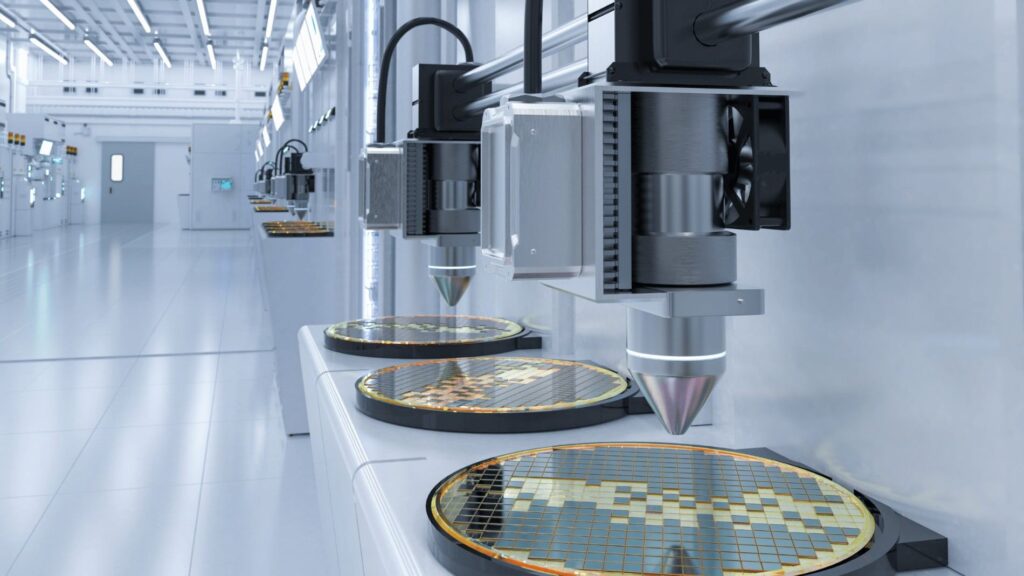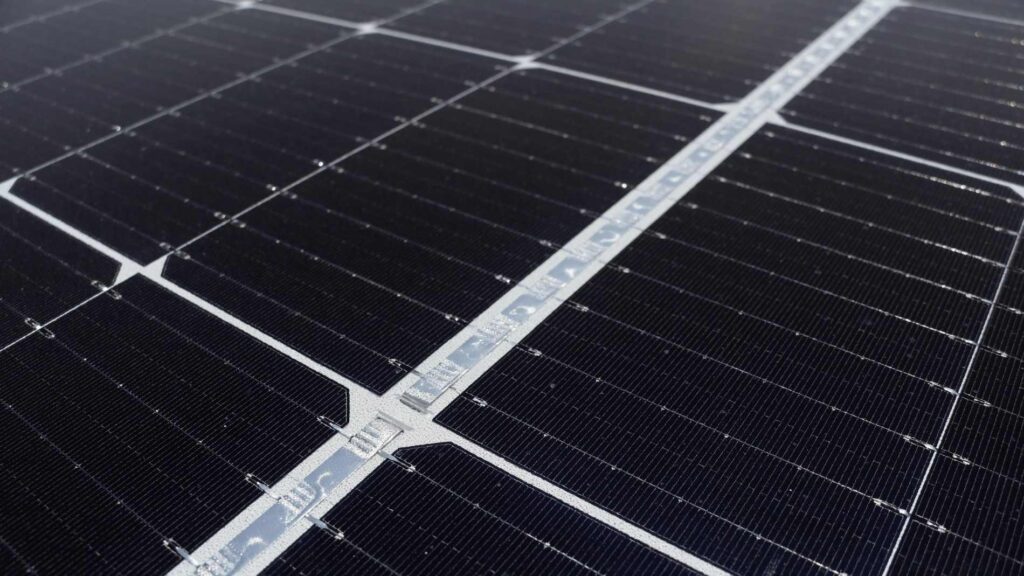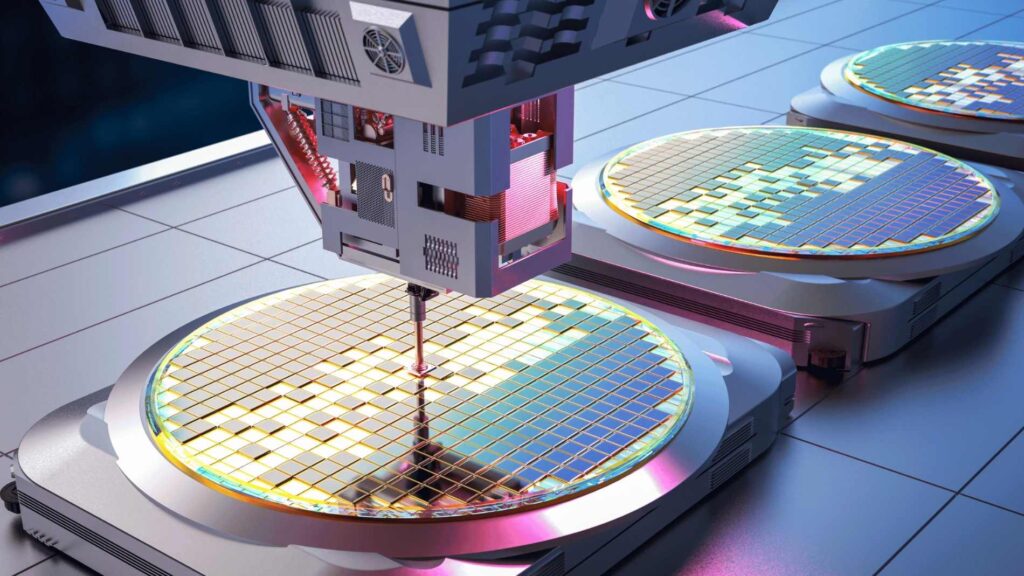
Two solar cell manufacturing facilities with the same annual production capacity may require significantly different building layouts, utility infrastructure, and environmental control systems.
The reason lies in the manufacturing technology.
PERC (Passivated Emitter and Rear Cell), TOPCon (Tunnel Oxide Passivated Contact), and HJT (Heterojunction Technology) use crystalline silicon wafers but differ in their processing methods, equipment requirements, and operating conditions.
These differences directly influence architectural planning, structural design, HVAC, electrical systems, process utilities, and factory expansion strategies.
The transition towards higher-efficiency solar cells makes these considerations increasingly relevant. According to the IEA PVPS Trends in Photovoltaic Applications 2026, n-type wafers represented approximately 82% of crystalline silicon wafers used for cell manufacturing in 2025.
Understanding how these technologies influence facility design is essential for planning efficient, adaptable, and cost-effective solar cell manufacturing plants.
How Do PERC, TOPCon, and HJT Manufacturing Processes Differ?
Although all three technologies convert sunlight into electricity using crystalline silicon, their manufacturing sequences are different.
PERC
PERC technology typically uses p-type silicon wafers and involves cleaning, texturing, phosphorus diffusion, surface passivation, laser opening, metallization, and firing.
Its production process uses established industrial equipment, including wet chemical processing systems, diffusion furnaces, deposition equipment, and screen-printing lines.
From a facility design perspective, PERC provides a useful reference for conventional crystalline silicon cell manufacturing infrastructure.
TOPCon
TOPCon generally uses n-type wafers and incorporates an ultra-thin tunnel oxide and doped polysilicon contact structure.
Compared with conventional PERC production, TOPCon introduces different diffusion, deposition, and thermal processing requirements.
Depending on the manufacturing route, production may use low-pressure chemical vapor deposition (LPCVD), plasma-enhanced chemical vapor deposition (PECVD), or other deposition methods.
These additional processes influence equipment footprints, specialty gas requirements, exhaust systems, electrical loads, and thermal management.
HJT
HJT combines crystalline silicon wafers with thin amorphous silicon layers and transparent conductive oxide coatings.
Its manufacturing process typically includes wet chemical cleaning, plasma-enhanced deposition, transparent conductive oxide deposition, and low-temperature metallization.
Unlike PERC and TOPCon, HJT avoids several conventional high-temperature diffusion and firing processes after wafer preparation.
However, it requires specialized vacuum deposition equipment, careful surface contamination control, and appropriate handling of process gases and materials.
These process differences form the basis of the facility’s engineering requirements.
How Do Factory Layout and Building Requirements Change?
The production equipment sequence determines the arrangement of manufacturing halls, utility corridors, material movement systems, and maintenance spaces.
PERC facilities generally follow a conventional sequence of wet processing, diffusion, deposition, metallization, and testing.
TOPCon facilities may require additional space for deposition systems, thermal processing, associated utility equipment, and intermediate material handling.
HJT facilities typically have fewer major process steps but require a different arrangement of wet processing, vacuum deposition, and coating equipment.
Structural and Equipment Installation Considerations
Equipment loads and installation requirements vary across technologies.
Large vacuum deposition equipment may require specific floor tolerances, vibration control, and maintenance access. Thermal processing equipment may introduce concentrated loads and substantial heat rejection requirements.
Structural engineers should coordinate equipment foundations, floor loading, service penetrations, and installation routes with the equipment supplier before finalizing the building design.
For future modifications, adequate service corridors and equipment replacement routes can be more valuable than simply providing additional production floor space.
What Are the Differences in Utility and HVAC Requirements?
Utilities are among the most significant differences between these manufacturing technologies.
Electrical Power and Process Cooling
PERC and TOPCon use high-temperature processing equipment, including diffusion and firing systems. TOPCon may require additional deposition and annealing equipment, depending on the selected process route.
HJT uses lower-temperature cell processing but relies extensively on vacuum deposition systems, plasma equipment, and process cooling.
Therefore, lower processing temperatures do not automatically translate into lower total electrical consumption.
Electrical demand must be evaluated using equipment-specific connected loads, operating profiles, cooling requirements, and production throughput.
Process Gases and Exhaust Systems
PERC production requires chemical distribution, diffusion-related gases, and process exhaust infrastructure.
TOPCon introduces additional or modified gas requirements associated with deposition and doping processes.
HJT commonly requires gases associated with plasma deposition, including silane and hydrogen, depending on the equipment configuration.
These systems may require dedicated gas cabinets, leak detection, emergency isolation, ventilation, and suitable exhaust treatment.
Gas safety infrastructure should be based on actual chemical inventories, equipment specifications, and applicable safety requirements.
HVAC and Environmental Control
All three technologies require appropriate temperature control, ventilation, and contamination management.
However, HJT processes can be particularly sensitive to surface contamination during wafer preparation and thin-film deposition. This may justify tighter environmental control or localized clean zones around sensitive equipment.
TOPCon also requires contamination management, particularly around wafer cleaning and deposition operations.
Environmental requirements should be established for individual processes rather than applying a single standard across the manufacturing hall. There is no universal cleanroom classification applicable to an entire PERC, TOPCon, or HJT facility.
How Do Water Treatment and Environmental Infrastructure Requirements Differ?
Wet chemical processing is common to all three technologies, although the number and nature of processing stages differ.
PERC and TOPCon may generate wastewater from texturing, cleaning, etching, and other chemical treatment processes.
HJT also requires high-quality wafer cleaning and surface preparation, despite having fewer overall manufacturing steps.
Depending on the process, effluent may contain acids, alkalis, fluorides, dissolved silicon compounds, and other contaminants. The effluent treatment plant must therefore be designed using the actual wastewater composition and generation rates.
How Should Technology Selection Influence Future Factory Expansion?
Technology changes can significantly affect the long-term usefulness of manufacturing infrastructure.
PERC and TOPCon share several process characteristics, making some existing PERC production lines suitable for conversion to TOPCon.
However, such conversion is not always straightforward. Additional deposition equipment, modified diffusion processes, utility upgrades, and changes to material handling may be necessary.
HJT generally requires a more substantially different equipment configuration.
A 2026 study by the Council on Energy, Environment and Water (CEEW) highlights the manufacturing similarities between PERC and TOPCon and the different process architecture of HJT. It also identifies differences in capital investment between these technologies.
Planning Infrastructure for Future Changes
Rather than oversizing every utility system, project owners should identify infrastructure that would be difficult or expensive to modify later.
This includes electrical distribution routes, utility corridors, process exhaust shafts, equipment installation access, and space for additional treatment systems.
A factory designed with accessible utility networks and adaptable production areas may accommodate technology changes more effectively than one optimized only for its initial equipment arrangement.
What Should Project Owners Evaluate Before Finalizing Facility Design?
The following comparison summarizes the main facility design implications.
| Design Parameter | PERC | TOPCon | HJT |
|---|---|---|---|
| Main Process Characteristic | Conventional diffusion and passivation | Passivated contacts with additional deposition | Low-temperature thin-film deposition |
| Thermal Processing | Significant | Significant, process-dependent | Lower-temperature cell processing |
| Key Equipment | Diffusion, PECVD, printing and firing | Diffusion, deposition, annealing and metallization | PECVD, TCO deposition and low-temperature metallization |
| HVAC Considerations | Process-based environmental control | Process-based control, especially near deposition | Strong emphasis on contamination-sensitive deposition |
| Utility Planning | Established chemical and thermal utility requirements | Additional or modified deposition utilities | Specialized vacuum, gas and cooling requirements |
| Conversion Potential | Potential upgrade to TOPCon | Can use some PERC-compatible infrastructure | Generally requires a substantially different production line |
These are typical process characteristics, not fixed design specifications. Actual requirements vary by equipment supplier, manufacturing route, automation level, and production capacity.
Before selecting a technology, project owners should compare equipment layouts, utility consumption, environmental requirements, treatment infrastructure, and expansion possibilities.
At VMS, multidisciplinary industrial architecture and engineering experience supports the coordination of production requirements with building design, structural systems, MEP infrastructure, and long-term factory planning.
Conclusion
The differences between TOPCon, HJT, and PERC solar cell manufacturing extend beyond cell efficiency and production equipment.
Each technology creates distinct requirements for factory layout, electrical infrastructure, process utilities, HVAC systems, contamination control, and maintenance.
For project owners, the most important consideration is to align facility design with the selected manufacturing process while retaining practical flexibility for future changes.
Planning a Solar Cell Manufacturing Facility? VMS Consultants provides multidisciplinary architecture and engineering services for solar manufacturing projects. Connect with our team to discuss production facility planning, utility infrastructure, and integrated factory design.
Frequently Asked Questions
1. Can an Existing PERC Manufacturing Facility Be Converted to TOPCon?
Yes, some PERC manufacturing facilities can be upgraded for TOPCon production. However, conversion feasibility depends on existing equipment, building space, utility capacity, and the selected TOPCon process route.
2. Does HJT Manufacturing Require a Cleanroom?
HJT manufacturing requires careful contamination control, particularly during wafer preparation and thin-film deposition. Whether a formally classified cleanroom is necessary depends on the process equipment and manufacturing specifications.
3. Which Technology Requires More Electricity: TOPCon or HJT?
There is no universal answer. TOPCon uses high-temperature processing and deposition equipment, while HJT relies on vacuum deposition, plasma systems, and process cooling. Total electricity consumption depends on equipment efficiency, manufacturing capacity, operating conditions, and utility design.
4. Which Solar Cell Technology Is Easier to Accommodate in an Existing Factory?
PERC-to-TOPCon conversion is generally more practical than converting a conventional PERC facility to HJT because of similarities in manufacturing processes. However, building suitability must be verified through equipment layout studies, structural assessments, and utility capacity evaluations.