India’s solar manufacturing industry is entering a new phase. For several years, growth was largely associated with adding capacity for photovoltaic modules and cells. Today, the direction is becoming broader.
Manufacturers are moving upstream into wafers, ingots and other components, while also expanding into battery energy storage systems (BESS), inverters, transformers and integrated energy solutions.
Recent developments reflect this transition. Saatvik Green Energy has expanded its portfolio beyond solar manufacturing into energy storage, inverters and transformers, while ReNew describes its business as an integrated clean-energy platform spanning manufacturing, generation and storage. Premier Energies is also expanding beyond solar cells and modules, including a recently announced battery energy storage manufacturing venture.
For industrial planners and designers, this shift raises an important question: If a solar manufacturer is evolving into an energy company, should its factory also be planned differently?
The answer increasingly points towards more flexible, integrated and future-ready manufacturing environments.
From a Solar Factory to an Energy Manufacturing Campus
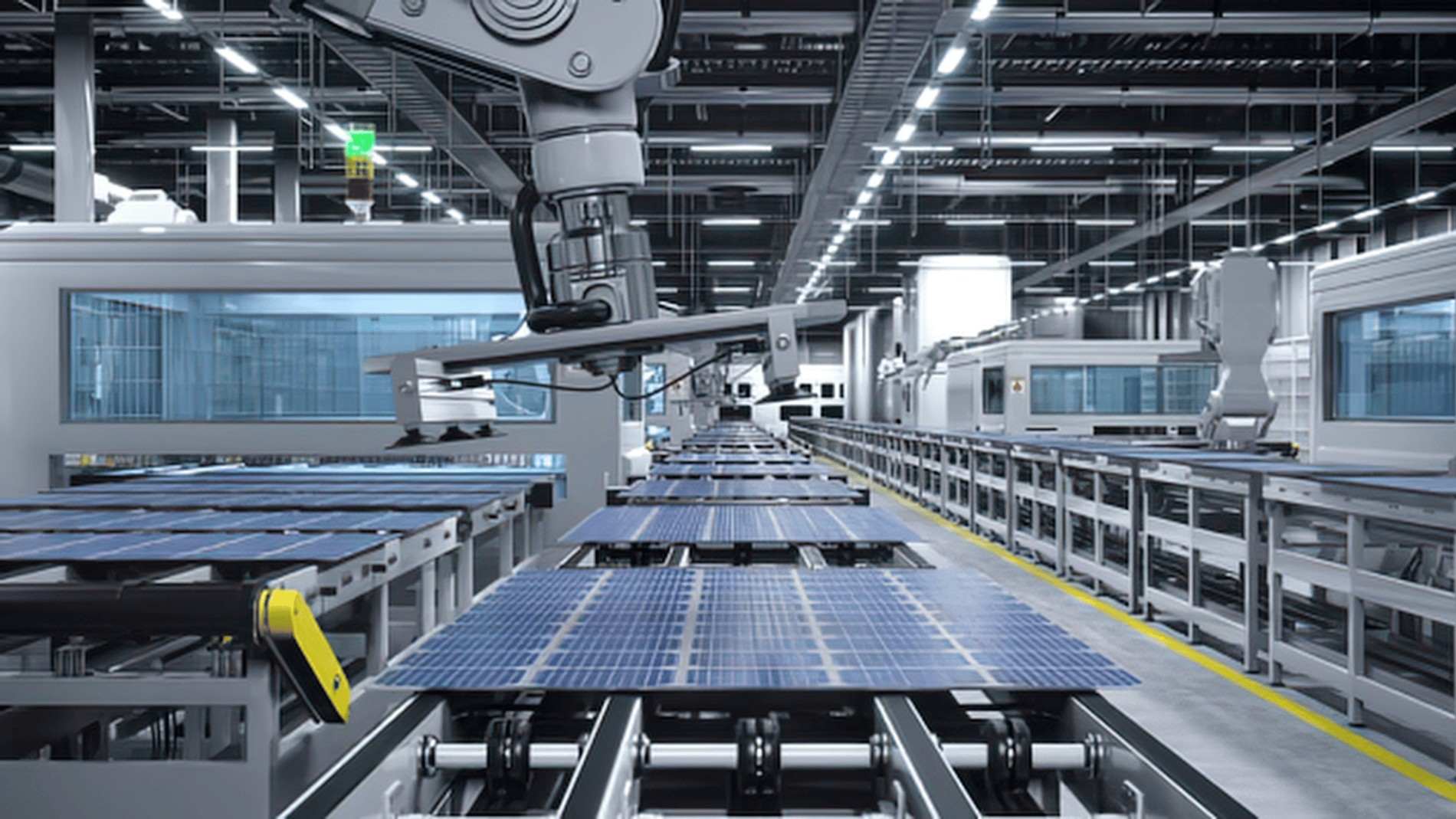
A conventional solar manufacturing facility is typically planned around a defined production process such as module or cell manufacturing with utilities, material movement, storage and supporting infrastructure developed around that process.
An integrated energy company may require a very different manufacturing environment.
A single industrial campus could eventually accommodate solar cells and modules, battery systems, inverters, power electronics, transformers or other components. Some manufacturers may also pursue backward integration into wafers, ingots, encapsulants and other parts of the solar value chain.
These processes do not necessarily have the same requirements.
They can differ considerably in terms of production layout, equipment, utility demand, environmental conditions, fire and life safety considerations, material storage and logistics.
Therefore, the master plan needs to look beyond the requirements of the first manufacturing block. It should consider what the facility may need to accommodate over its complete development cycle.
Master Planning Needs Greater Flexibility
When manufacturers are expanding into multiple energy technologies, long-term master planning becomes increasingly important.
Future production blocks, warehouses, utility areas and supporting infrastructure should be considered at the initial planning stage wherever the expansion roadmap is reasonably known.
The location of roads, utility corridors, substations, fire access, employee movement and material gates can influence whether future expansion is straightforward or requires significant modification to an operating facility.
A phased master plan can help define:
- Areas for future production expansion
- Independent movement routes for people and materials
- Expandable utility and electrical infrastructure
- Space for additional warehousing and storage
- Future fire tender access and emergency circulation
- Common infrastructure that can support multiple manufacturing blocks
This does not mean designing an entire future factory on day one. Rather, it means avoiding decisions today that unnecessarily restrict tomorrow’s expansion.
Different Technologies Bring Different Design Requirements
Moving from solar manufacturing into broader energy products is not simply a matter of adding another production line.
Consider a manufacturer introducing battery energy storage systems alongside an existing solar manufacturing operation. Battery assembly, testing and storage introduce different risk considerations, including thermal runaway, fire propagation and potentially hazardous gas emissions. Safety therefore becomes a fundamental part of facility planning rather than an isolated engineering requirement.
Similarly, inverter, transformer and power-electronics manufacturing may require different assembly areas, testing facilities, electrical infrastructure, material handling arrangements and environmental controls.
The architecture and engineering of the facility must respond to these differences while allowing individual operations to function efficiently as part of the larger campus.
Utility Planning Becomes More Complex
Utilities are closely connected to the manufacturing process.
As the product mix changes, so can electrical loads, cooling requirements, compressed air demand, ventilation, water requirements and fire protection systems.
This makes utility master planning particularly important for diversified energy manufacturing campuses.
Instead of sizing every system only for the immediate production requirement, designers can evaluate the likely development phases of the facility and determine which infrastructure should be scalable.
Electrical substations, utility yards, pipe racks, service corridors, water systems and fire infrastructure can then be positioned strategically so that future production areas can connect with minimum disruption.
The objective is not necessarily to install excess capacity initially. It is to create an infrastructure framework that can be expanded logically as manufacturing capacity grows.
Logistics Must Evolve With the Product Mix
A solar module plant and a battery manufacturing or assembly facility can have very different logistics requirements.
The type, dimensions, weight and handling requirements of incoming materials and finished products influence warehouse design, loading areas, internal roads and movement routes.
As more products are introduced within the same campus, these movements can become increasingly complex.
Good planning should therefore separate conflicting flows wherever practical. Raw materials, finished products, employees, visitors, maintenance vehicles and emergency services should be able to move through the site safely and efficiently.
Warehouse planning also needs flexibility. A storage facility designed around one product category may not necessarily suit another without modifications to fire protection, loading arrangements, storage systems or environmental conditions.
The Factory Can Become Part of the Energy System
There is another dimension to the shift from solar to energy: the manufacturing facility itself can become a demonstration of integrated energy thinking.
Large industrial campuses have significant energy requirements. Rooftop or ground-mounted solar generation can be combined with battery storage, energy monitoring, demand management and efficient building systems.
For manufacturers producing these technologies themselves, their facility can potentially serve both operational and demonstration purposes.
The objective is not simply to generate renewable electricity on site. The larger opportunity is to coordinate generation, storage, consumption and monitoring as one system.
This approach can help manufacturers evaluate energy demand more strategically while improving the resilience and efficiency of industrial operations.
Final Thoughts
The transition from solar companies to broader energy companies is still developing, and different manufacturers will follow different paths.
Some may pursue backward integration within the photovoltaic value chain. Others may diversify into batteries, inverters, transformers or other energy technologies. Some may eventually bring several of these operations together within large integrated manufacturing campuses.
This makes adaptability an important consideration in industrial design.
A factory planned only around today’s production line may become restrictive when the business introduces a new product or manufacturing technology. A well-planned facility, on the other hand, can provide a framework within which production blocks, utilities, logistics and supporting infrastructure can evolve over time.
For architects and engineers, the shift therefore changes the question from “How do we design this factory?” to “How do we design an industrial campus that can respond to what this manufacturer may become?”
As India’s clean-energy manufacturing ecosystem expands, the facilities supporting it will need to evolve as well.
At VMS, we provide integrated architecture and engineering consultancy for industrial and manufacturing facilities, covering master planning, architectural, structural, MEP and infrastructure design. Our multidisciplinary approach helps manufacturers plan facilities around current operational requirements while considering future expansion and evolving production needs.