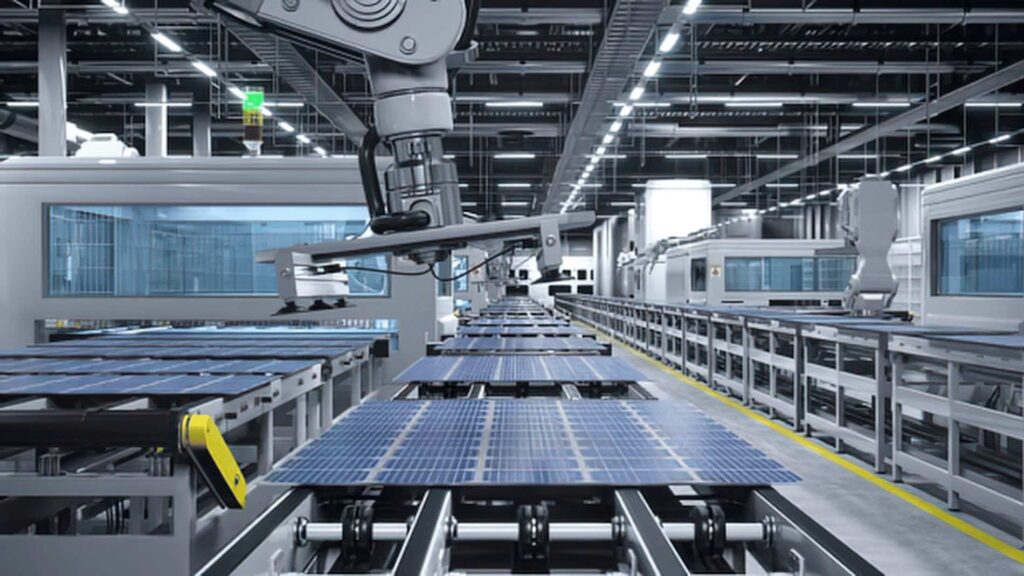
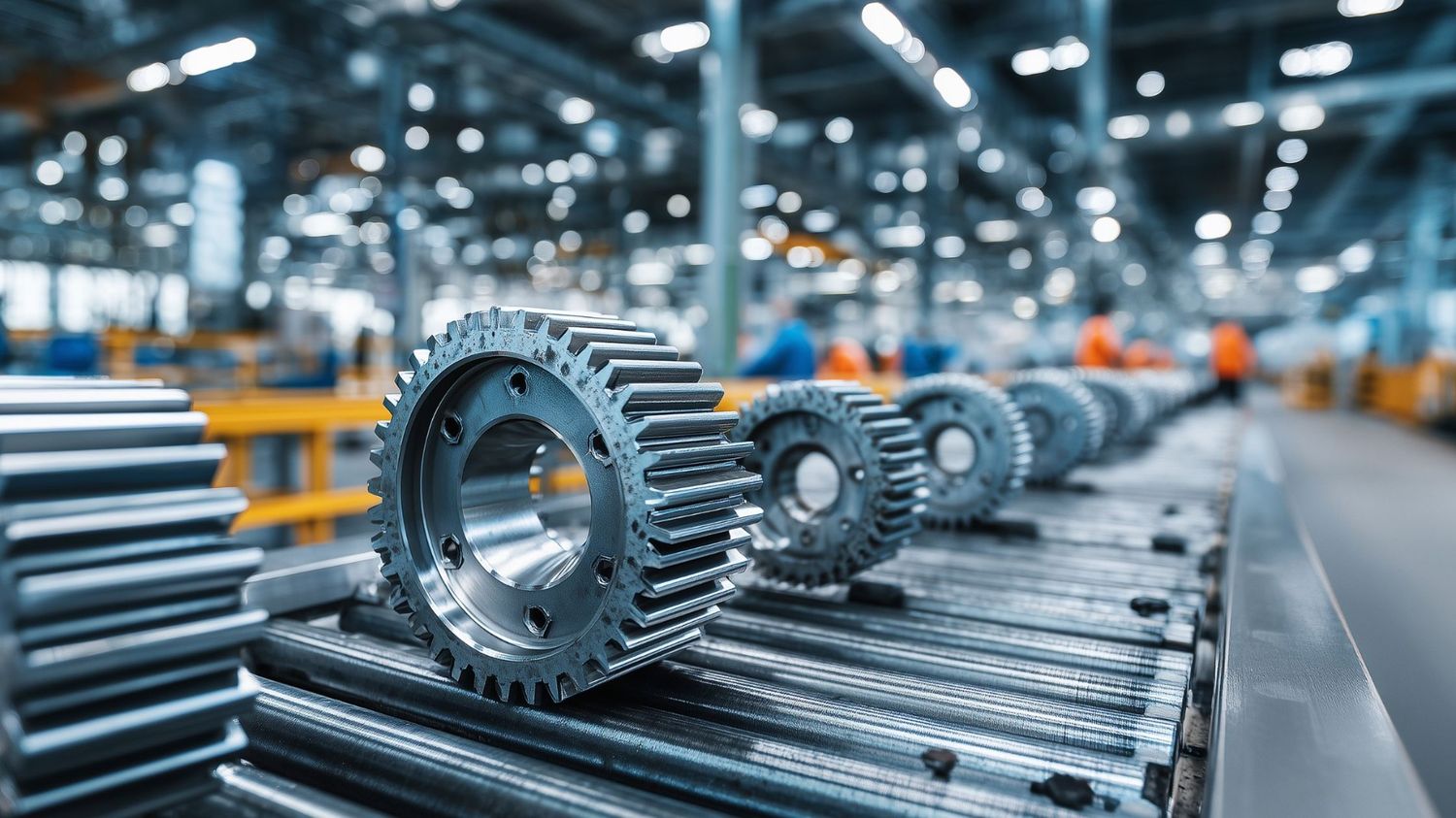
Precision manufacturing can work within tolerances measured in microns. At that level, a small temperature change, nearby vibration, airborne particle or unstable utility supply can affect the finished component.
Investing in advanced CNC machines, coordinate measuring machines and automated inspection systems is not enough. Their performance depends heavily on the building in which they operate.
Factory design for precision manufacturing must create stable conditions for production, measurement and material movement. The layout, structure, services and operating environment should all support consistent accuracy from the first process to final inspection.
What Is Precision Manufacturing?
Precision manufacturing produces components with tight dimensional tolerances, controlled surface finishes and consistent material properties. It is commonly used for aerospace, defense, automotive, electronics, medical devices, molds, dies and specialized industrial equipment.
Processes may include CNC machining, grinding, laser cutting, electrical discharge machining, additive manufacturing, microfabrication and automated assembly. These are usually supported by calibrated inspection and metrology systems.
Precision does not come from one machine alone. It depends on the entire production chain, including raw-material quality, tool condition, temperature, machine stability, operator practice and measurement accuracy.
Why Facility Design Matters
Machine accuracy is generally stated under defined operating conditions. If the shop floor experiences heat variation, vibration or contamination, actual performance may differ from the equipment specification.
The Economic Survey 2025–26 notes India’s movement towards high-technology manufacturing, where competitiveness increasingly depends on more than low production cost. Reliability, quality and participation in advanced global value chains are becoming more important. (Economic Survey 2025–26)
The Union Budget 2026–27 also proposed digitally enabled Hi-Tech Tool Rooms to design, test and manufacture high-precision components at scale. This reflects the growing importance of precision capabilities within India’s manufacturing ecosystem. (Union Budget 2026–27)
8 Critical Planning Considerations
The design process should begin by studying the product tolerances, equipment specifications, process sequence and inspection requirements. These inputs determine the environmental and infrastructure conditions required by the facility.
Environmental Control
Temperature affects machines, measuring instruments and manufactured components. Metals expand and contract with changes in temperature, which can influence dimensional accuracy.
Precision areas should therefore be protected from direct solar heat, hot external walls, large doors and heat-producing processes. The building envelope, insulation and HVAC system should maintain conditions suitable for the required tolerance.
Uniformity is as important as the set temperature. Strong air discharge over a machine may create local temperature differences even when the room average remains within range.
Humidity control may also be necessary to prevent corrosion, static electricity or changes in moisture-sensitive materials. Requirements should be based on the process rather than applying one condition throughout the factory.
Vibration Control
Vibration may come from presses, compressors, heavy vehicles, cranes, pumps or nearby construction. It can affect machining, optical measurement and surface-finish quality.
Sensitive machines should be separated from impact-generating equipment. The site layout should also consider the distance from highways, railway tracks and heavy internal roads.
The foundation strategy may include isolated machine foundations, inertia blocks, vibration pads or structural separation. Selection should follow equipment-vendor limits and measured or predicted vibration levels.
CSIR–National Physical Laboratory maintains national capabilities across dimensional, acoustic and vibration metrology, highlighting the close relationship between controlled measurement and physical stability. (CSIR–NPL)
Cleanliness and Contamination Prevention
Precision manufacturing does not always require a formal cleanroom, but it usually needs disciplined control of dust, oil mist, chips and process residue.
Grinding dust should not migrate into assembly or inspection areas. Dirty and clean processes should be separated through zoning, enclosures, pressure control or dedicated extraction.
Material and personnel entry should be planned to prevent contamination from external yards. Depending on the product, the facility may require airlocks, gowning rooms, sticky mats or controlled pass-throughs.
Finishes also matter. Floors, walls and ceilings should be durable, easy to clean and resistant to process chemicals. Horizontal ledges that collect dust should be minimized in controlled areas.
Precision Utilities
Advanced machines depend on stable electricity, compressed air, cooling water, gases, vacuum and data connectivity. A fluctuation may stop equipment, affect calibration or damage a workpiece already under production.
The electrical design should evaluate voltage quality, harmonics, earthing, backup power and uninterrupted supply for controls. Sensitive equipment may require dedicated feeders or local power-conditioning systems.
Compressed air should meet the required pressure, dryness and filtration level. Process cooling must maintain a stable supply temperature even when outdoor conditions or production loads change.
Utility lines should be accessible for maintenance without passing directly above sensitive machines where leakage could cause damage. Isolation points and spare capacity should be planned for future equipment.
Equipment Layout
The equipment layout should follow the manufacturing sequence from raw material to finished component. Backtracking and repeated handling increase production time and the risk of damage.
Machine orientation should provide safe loading, tool changing and maintenance access. Space must be available to remove spindles, motors or other major components without dismantling neighboring machines.
Heavy or vibration-producing equipment should be placed after studying the structural grid and foundation requirements. Metrology rooms should remain away from loading docks, press shops, utility plants and busy circulation areas.
VMS Consultants integrates industrial architecture, structural engineering and MEPF design so that equipment requirements are coordinated with the building from the planning stage.
Material Handling
Precision parts may be small in size but high in value. Their surfaces and dimensions can be damaged by unsuitable handling.
Material flow should minimize transfers between pallets, trolleys and containers. Dedicated routes may be required for raw stock, finished components, cutting tools, rejects and scrap.
Overhead cranes can support heavy components but may transmit vibration or create contamination concerns in sensitive zones. Automated Guided Vehicles and enclosed transfer systems may suit controlled operations, subject to floor quality and route planning.
Work-in-progress needs protected holding areas between operations. Components should not be left in aisles or placed near heat sources while waiting for the next process.
Quality Inspection Areas
Inspection should not be treated as a corner of the production floor. The location and environment must support the accuracy of the instruments being used.
A metrology room may require stable temperature, humidity control, low vibration, clean air and limited access. Coordinate measuring machines and optical equipment should be installed according to manufacturer requirements.
Components also need time to reach the measurement-room temperature before inspection. Without thermal stabilization, a part may be measured at a temperature different from the reference condition.
Measurement traceability is equally important. CSIR–NPL provides dimensional and nano-metrology services that support calibration, testing and internationally aligned measurement practices for Indian industry. (CSIR–NPL Dimensional Metrology)
Future Scalability
Precision facilities often begin with a limited number of specialized machines and expand as products are qualified or orders increase.
Expansion areas should extend the process in a logical direction. New machines should not force materials to cross inspection areas or interrupt existing production.
The structural grid, electrical capacity, HVAC zones, utility headers and data network should allow planned additions. Equipment installation routes must also remain available after the first phase becomes operational.
Flexibility does not mean leaving large areas empty. It means deciding in advance where capacity can grow and how the supporting infrastructure will reach it.
Common Design Mistakes
One common mistake is using general factory conditions for equipment that needs a tightly controlled environment. If temperature and vibration limits are not established early, the building may require expensive modifications after machine installation.
Poor equipment placement is another concern. Machines may fit on the plan but lack space for loading, chip removal, maintenance or future automation.
Locating inspection areas next to production aisles, external walls or heavy equipment can affect measurement reliability. Metrology rooms should be treated as controlled technical spaces.
Utilities are also frequently sized around the initial equipment list. Without spare capacity or planned connection points, adding one machine may require shutdowns and major service alterations.
Finally, many facilities reserve land for expansion but do not protect the process-flow direction. Additional buildings then create longer material routes and disconnected production areas.
Key Takeaways
For effective factory design for precision manufacturing:
- Define product tolerances before setting environmental criteria.
- Confirm temperature, humidity and vibration limits with equipment vendors.
- Separate clean processes from dust- or mist-generating operations.
- Design machine foundations according to dynamic performance.
- Provide stable and appropriately treated utilities.
- Arrange equipment according to the production sequence.
- Protect components during storage and movement.
- Treat inspection and metrology as controlled functions.
- Maintain access for machine installation and maintenance.
- Plan building and utility expansion together.
Conclusion
Precision manufacturing depends on controlling small variations across the complete operation. A machine cannot consistently hold tight tolerances if its surroundings are thermally unstable, contaminated or affected by vibration.
The facility should therefore be designed as part of the precision system. When the environment, structure, utilities, layout and metrology functions are coordinated early, the factory is better prepared to achieve consistent quality and support future growth.
Frequently Asked Questions
What Is Precision Manufacturing?
Precision manufacturing produces components with tight dimensional tolerances, controlled finishes and high repeatability using specialized production and measurement equipment.
Does Every Precision Factory Need a Cleanroom?
No. The required cleanliness level depends on the product and process. Some operations need controlled housekeeping and extraction, while electronics, optics or medical products may require classified cleanrooms.
Why Is Temperature Control Important?
Temperature changes cause machines and components to expand or contract, which can affect machining and measurement accuracy.
Where Should the Quality Inspection Room Be Located?
It should be close enough to production for efficient access but isolated from vibration, dust, heat, external doors and heavy traffic.
VMS provides integrated architecture, engineering and project management services for high-performance industrial and precision manufacturing facilities. Connect with VMS to plan a factory where environment, equipment, utilities and quality requirements are designed as one coordinated system.