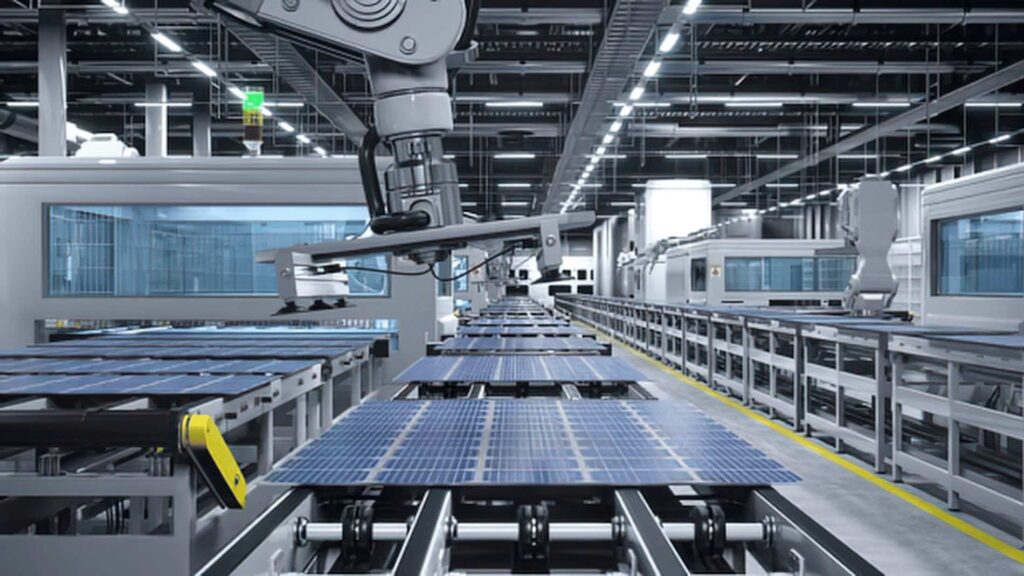
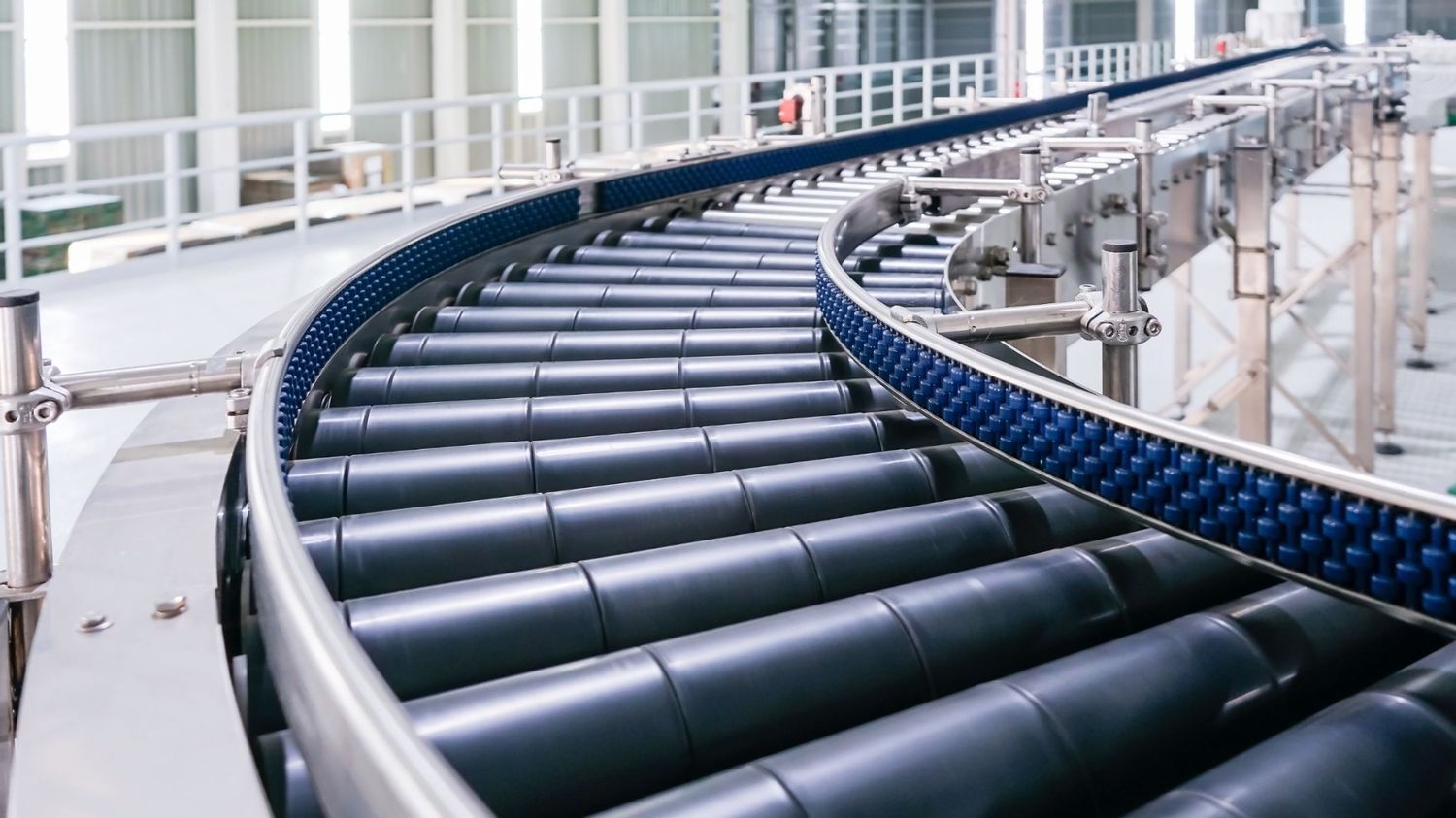
In a conventional batch factory, production can stop after completing a defined quantity. Continuous manufacturing facilities operate differently. Materials keep moving through connected processes, often for extended hours or throughout the day.
This model can improve output, product consistency and equipment utilization. However, it also increases dependence on every connected machine and utility. A failure at one point can slow or stop the entire line.
Designing a facility for continuous manufacturing systems requires the process, equipment, utilities, controls, maintenance access and safety systems to be planned as one operating network. The objective is not only to achieve uninterrupted flow, but also to make that flow reliable, safe and adaptable.
Understanding Continuous Manufacturing
Continuous manufacturing is a production model in which raw materials enter the process and finished products are produced through an ongoing series of connected operations.
Unlike batch manufacturing, the material does not wait for one complete batch to finish before moving to the next stage. It may pass directly through mixers, reactors, furnaces, dryers, conveyors, forming equipment or packing systems.
Continuous, Batch and Hybrid Systems
Batch production is useful where a factory makes several product variants or requires regular cleaning and changeovers. It allows individual production quantities to be separated and tracked.
Continuous manufacturing is generally suited to high-volume products with stable demand and repeatable process conditions. It reduces repeated starting, stopping and intermediate handling.
Many factories use a hybrid model. The main production stage may operate continuously, while preparation, inspection, cleaning or packing remains batch-based.
In pharmaceutical manufacturing, the ICH Q13 guideline recognizes different continuous manufacturing configurations, including fully integrated and partially integrated systems. It also addresses process control, disturbances and lifecycle management. (ICH Q13 Guideline)
Industries That Use Continuous Manufacturing
Continuous systems are common in:
- Chemicals and petrochemicals
- Cement and building materials
- Steel and metals
- Glass manufacturing
- Paper and pulp
- Food and beverage processing
- Pharmaceuticals
- Plastics and polymers
- Textiles
- Energy and utility-intensive industries
The nature of the flow differs between sectors. Cement may move through crushing, grinding, blending and kilns. Food products may pass through preparation, cooking, cooling and packing. Chemical production may depend on controlled transfer between reactors, separators and storage vessels.
Translating the Process Into the Facility
The design must begin with a complete understanding of the manufacturing sequence. Preparing the building layout before the process is defined can result in long transfer routes, conflicting levels and inadequate utility access.
Process flow diagrams should identify raw-material inputs, production stages, process conditions, intermediate storage, quality checks and waste outputs.
These diagrams are then developed into equipment layouts, piping and instrumentation diagrams, utility schedules and control-system requirements.
Create a Direct Process Flow
A continuous line should follow a clear direction from raw-material receipt to finished-goods dispatch.
A linear layout is often suitable because it makes the production sequence easy to follow. However, the final arrangement may be straight, U-shaped, vertical or a combination of patterns depending on the site and process.
Gravity can be used where materials naturally move between levels. This may reduce pumping or mechanical transfer, but it increases the importance of structural coordination and safe access.
Backtracking should be avoided. When materials return towards an earlier production zone, they increase travel distance and create conflicts with incoming flow.
Balance Connected Operations
The output of one stage must match the receiving capacity of the next. If an upstream machine produces faster than the downstream process, material begins accumulating between them.
Calculated buffer storage can absorb short-term variations. This may take the form of tanks, silos, accumulation conveyors or controlled work-in-progress areas.
Buffers should provide operational stability without creating excessive inventory. Their capacity should be based on process response time, likely interruption duration and restart requirements.
Coordinating Equipment and Utilities
Continuous manufacturing equipment is usually interconnected. The position of one machine can influence pipe routes, conveyor levels, maintenance areas and structural loading across the facility.
Equipment should be arranged using its full operating and maintenance envelope—not only its external dimensions.
The layout should provide space for loading, inspection, cleaning, tool changes and the removal of major components. Equipment that is difficult to maintain can turn a minor repair into a long production shutdown.
Structural and Installation Requirements
Kilns, reactors, mills, presses, tanks and rotating machinery can create heavy static loads, vibration and thermal movement.
The structural design should account for:
- Equipment and operating loads
- Dynamic forces and vibration
- Machine foundations
- Openings between floors
- Pipe racks and service platforms
- Overhead cranes and lifting beams
- Thermal expansion
- Equipment installation and replacement routes
Large equipment may arrive after part of the building is constructed. Temporary wall openings, removable roof sections or dedicated installation bays may be required.
VMS Consultants coordinates process requirements with architecture, structural engineering, MEPF and site infrastructure to develop industrial facilities around complete operating needs.
Build Reliable Utility Infrastructure
Electricity, water, compressed air, cooling, steam, gases, ventilation and data systems are part of the production process. Their reliability must match the required plant availability.
Utility demand should be calculated for normal operation, peak production, start-up and emergency conditions. Average consumption alone may underestimate the requirement.
Critical systems may need standby pumps, compressors or cooling equipment. An N+1 arrangement provides one additional unit beyond the number required for normal operation, subject to process risk and lifecycle-cost assessment.
Ring networks can allow utilities to reach equipment from more than one direction. Sectional isolation helps maintenance teams work on one area without stopping unrelated production.
Emergency power may be required for control systems, safe equipment shutdown, ventilation, cooling and fire protection. Not every machine needs to continue running, but the process must be brought to a safe condition.
Integrating Automation and Control
Continuous processes depend on real-time information. Sensors monitor parameters such as temperature, pressure, flow, level, vibration and product quality.
A PLC, Distributed Control System or Manufacturing Execution System can coordinate these signals and adjust equipment to maintain stable production.
Alarm priorities should be clearly defined. Operators need to distinguish between an advisory warning, a condition requiring intervention and a critical event requiring shutdown.
India’s Industry 4.0 direction is encouraging greater use of connected machines, cyber-physical systems and real-time data in manufacturing. These technologies can improve efficiency and resource use when supported by reliable physical infrastructure. (Press Information Bureau)
Control rooms should provide good visibility or digital oversight of the process. They also require stable power, cooling, communication networks and protection from process hazards.
Cybersecurity must be considered where operational systems connect with business networks or external monitoring platforms. Manual intervention and safe shutdown procedures should remain available if digital controls fail.
Planning Movement, Maintenance and Safety
Continuous production still requires regular movement of raw materials, packaging, finished products, employees and waste.
Incoming logistics should supply the line without crossing dispatch routes. Bulk materials may require silos, tanks or covered unloading stations close to the first process stage.
Waste and rejected products should leave through controlled routes. Hazardous or contaminated waste must not pass through clean production areas.
Maintenance Without Major Disruption
Maintenance strategy should influence the layout from the beginning. Safe access platforms, stairs, walkways and lifting systems should be provided around equipment.
Utility and service corridors can allow technicians to reach valves, panels and filters without entering active process areas. Critical equipment may need space for parallel maintenance or quick replacement.
Condition-monitoring systems can track vibration, temperature, lubrication and power use. Predictive maintenance helps identify deterioration before it causes an unplanned shutdown.
Safety Systems
A disturbance can travel quickly through an interconnected process. Isolation systems are therefore essential.
Depending on the industry, safety provisions may include:
- Emergency shutdown controls
- Pressure relief and venting
- Fire and gas detection
- Spill containment
- Hazardous-area classification
- Fire-rated separation
- Local exhaust ventilation
- Emergency cooling
- Safe access and escape routes
Safety studies should review start-up, normal production, cleaning, shutdown and abnormal conditions. Applicable National Building Code provisions, Indian Standards, state factory rules and environmental requirements should be verified for the process.
The Bureau of Indian Standards publishes guidance covering hazards, material handling and operating safety in process industries. (BIS Process-Industry Safety Standards)
Preparing for Future Capacity
Continuous facilities are difficult to expand if the original production line ends against a permanent structure or utility area.
Expansion should follow the direction of the process. Space may be reserved for parallel equipment, a second line or additional downstream capacity.
Utility mains should include planned connection points and realistic spare capacity. Roads, drainage, fire systems and finished-goods handling must also support the expanded output.
Phased expansion should avoid construction traffic passing through active production. Temporary isolation, alternative access and commissioning sequences should be considered during master planning.
Common Challenges
Downtime is the most visible risk. Because operations are connected, a single equipment failure may stop production beyond the affected machine.
Utility unreliability creates a similar problem. Voltage fluctuations, pressure loss or cooling failure may affect product quality before the line stops completely.
Process interruptions can also generate off-specification material during shutdown and restart. The facility needs defined diversion, quarantine and disposal arrangements.
Another challenge is overdependence on one critical machine. Removing standby capacity may reduce the initial investment, but it can increase the financial impact of failure.
Finally, compact layouts may reduce transfer distance but restrict maintenance. The best arrangement balances process connection with safe access and equipment replacement.
Key Takeaways
For effective continuous manufacturing facility design:
- Define whether production is continuous or hybrid.
- Develop the process flow before fixing the building.
- Match the capacities of connected equipment.
- Provide calculated buffers at critical stages.
- Coordinate equipment with structure and maintenance access.
- Design utilities for peak, start-up and emergency loads.
- Provide redundancy according to process risk.
- Integrate control systems with reliable power and data.
- Separate material, personnel and waste routes.
- Study normal and abnormal operating conditions.
- Protect a logical direction for future expansion.
- Plan shutdown and restart procedures within the design.
Conclusion
A continuous manufacturing facility is an interconnected production system, not simply a building containing a long line of machines.
Efficient flow is important, but stable utilities, maintainable equipment, reliable controls and safe isolation are what keep the process operating. Early coordination between production, architecture and engineering helps reduce interruptions and supports long-term capacity growth.
Frequently Asked Questions
What Is Continuous Manufacturing?
It is a production method in which materials move through connected operations for extended periods without being divided into separate batches at every stage.
Which Industries Use Continuous Manufacturing?
It is commonly used in chemicals, cement, metals, glass, paper, food processing, pharmaceuticals, plastics and other high-volume industries.
Why Is Utility Redundancy Important?
A failure in power, cooling, compressed air or another critical service can interrupt the complete line or affect product quality.
Can a Batch Factory Be Converted to Continuous Production?
It may be possible, but equipment, layout, utilities, controls, quality systems and regulatory requirements must be assessed. A hybrid approach may be more practical.
VMS provides integrated architecture, engineering, and project management services for complex industrial and process facilities. Connect with VMS to plan a continuous manufacturing facility built around reliable flow, utilities, safety and future capacity.