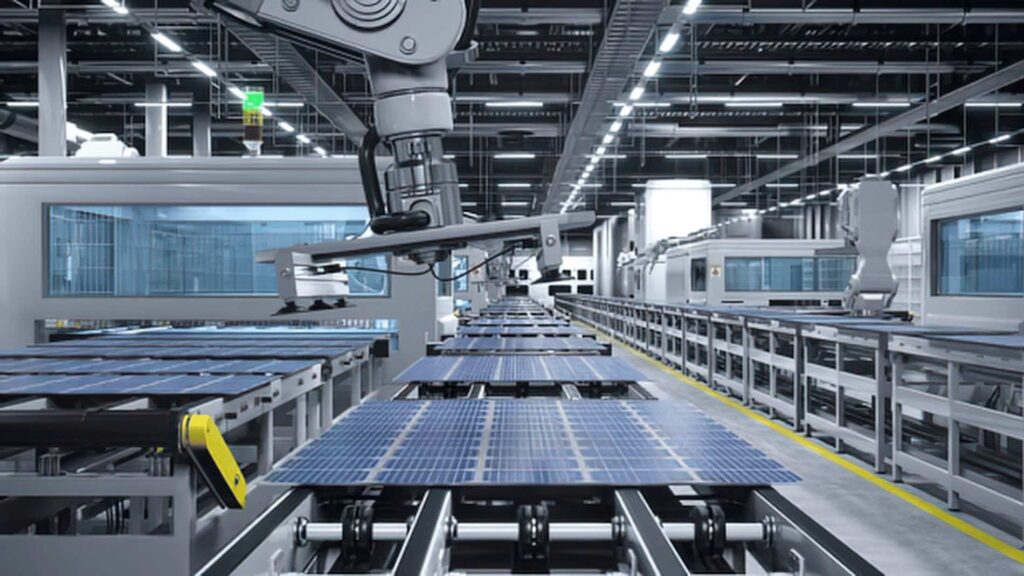
A factory layout should respond to how a product is made. A plant that produces several formulations in smaller quantities needs a different arrangement from one designed to manufacture the same product throughout the day.
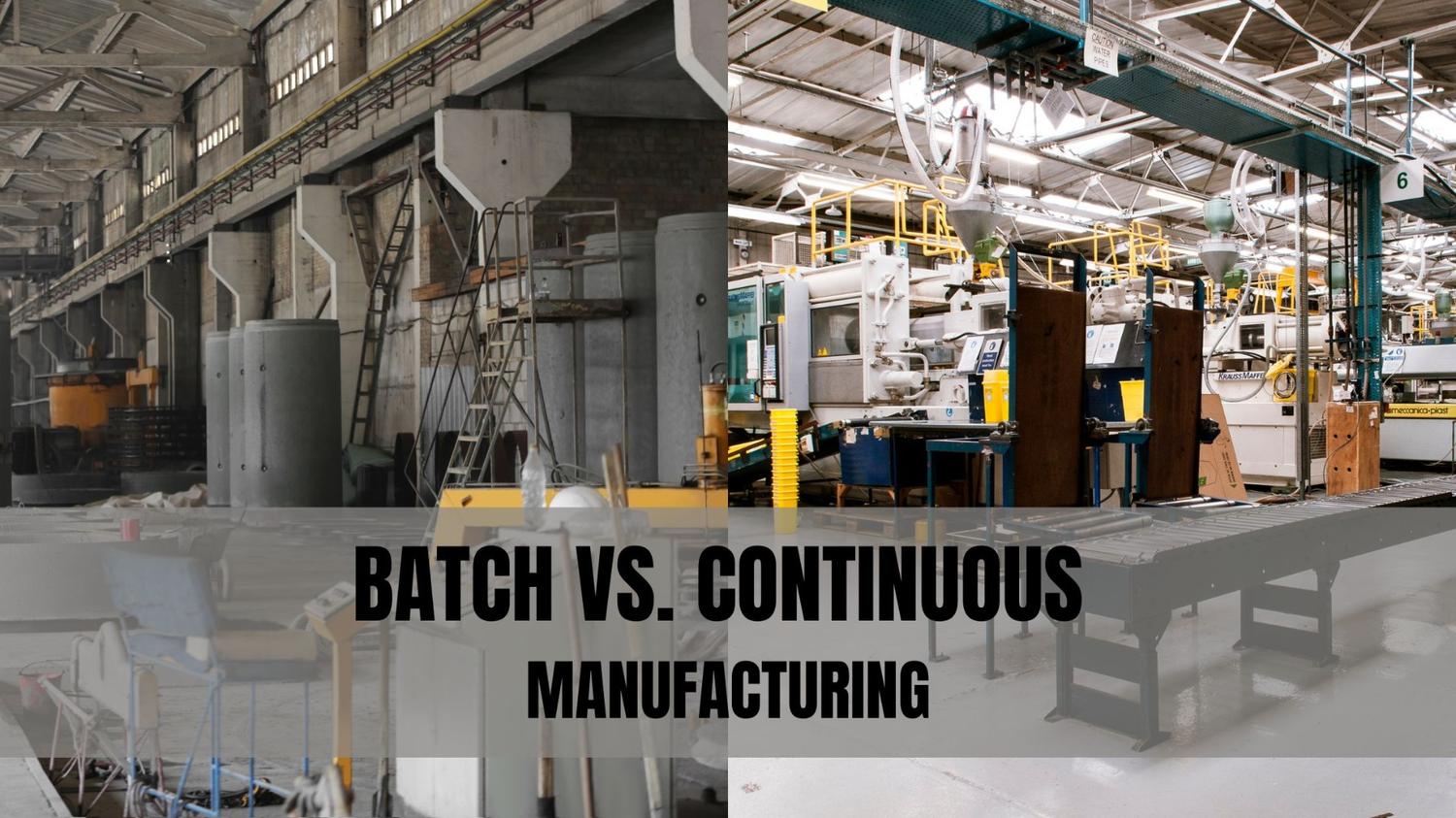
This difference is central to the choice between batch and continuous manufacturing. Both methods can deliver efficient and consistent production, but their building, equipment, utility and storage requirements are not the same.
Choosing the correct approach requires more than comparing output rates. Manufacturers must consider product variety, demand, process stability, cleaning, investment and future growth before fixing the factory design.
Understanding Batch and Continuous Manufacturing
Batch manufacturing produces a defined quantity before the equipment is stopped, cleaned, adjusted or prepared for the next production cycle.
Each batch can have its own recipe, production record and quality approval. This makes the method useful where products, formulations or quantities change regularly.
Continuous manufacturing keeps material moving through connected operations for extended periods. Raw materials enter the system while finished products are produced at the other end.
It is generally suitable for stable, high-volume production where equipment can remain dedicated to a consistent process.
Key Differences
| Factor | Batch Manufacturing | Continuous Manufacturing |
| Production | Fixed quantities | Ongoing material flow |
| Flexibility | Higher product flexibility | Best for stable products |
| Equipment | Often shared | Usually dedicated |
| Changeovers | Frequent | Limited |
| Work-In-Progress | Usually higher | Can be lower |
| Process Control | Checked by batch | Monitored continuously |
| Expansion | Additional equipment or batches | Parallel lines or higher throughput |
| Downtime Impact | Usually limited to one batch | Can affect the full line |
The distinction is not always absolute. A facility may use continuous processing for one production stage and batch-based preparation, inspection or packing for another.
In pharmaceutical production, the ICH Q13 guideline recognizes both integrated and partially integrated continuous manufacturing systems. It also addresses process disturbances, material traceability and lifecycle management. (ICH Q13 Guideline)
How the Manufacturing Method Shapes Factory Design
The selected production method influences building form, equipment relationships, internal movement and infrastructure.
Batch factories generally need greater flexibility. Continuous plants need stronger physical connections and higher utility reliability.
Layout Requirements
A batch-manufacturing layout may be arranged by function. Mixing, processing, filling and cleaning can occupy separate rooms or departments, with materials transferred between them.
This layout supports different production routes. However, it may increase travel distance and create more work-in-progress.
Mobile vessels, trolleys and containers are common in batch facilities. Wider aisles, staging areas, washing spaces and controlled holding zones may therefore be required.
Continuous manufacturing usually follows a more direct process sequence. Equipment is positioned according to the order of production, with materials transferred through pipes, conveyors or enclosed systems.
A linear, vertical or U-shaped arrangement may be used depending on the process and site. The main objective is to prevent unnecessary interruption between connected stages.
Equipment Selection
Batch equipment should support product changeovers and cleaning. Manufacturers may select multipurpose mixers, reactors or filling lines that can handle different products.
Equipment capacities must align with the intended batch size. If one vessel holds considerably more than the next process can accept, the facility may require temporary storage and additional handling.
Continuous manufacturing equipment is selected according to throughput per hour rather than batch volume. Feeders, reactors, dryers, forming equipment and inspection systems must operate at compatible rates.
A bottleneck in one machine can restrict the complete line. Buffer tanks, silos or accumulation conveyors may be needed to manage short differences in equipment speed.
Material Flow and Storage
Batch production requires space for materials waiting before, between and after operations. Quarantine, work-in-progress and batch-wise finished-goods storage can occupy a considerable part of the facility.
Separate holding areas may also be required for material awaiting quality approval. Routes should prevent the mixing of different batches and product grades.
Continuous production can reduce intermediate storage because materials move directly between stages. However, raw-material supply must remain consistent.
Bulk storage may be required to maintain uninterrupted feeding. Facilities may use silos, tanks, day bins or automated transfer systems near the production line.
Finished-goods storage depends on dispatch frequency. A continuous plant that produces faster than it dispatches may still require a large warehouse.
Utility Requirements
A batch facility experiences changing utility loads. Demand may rise during heating, cooling, washing or equipment start-up and fall between cycles.
Utility systems should be designed for simultaneous peak demand rather than relying only on average consumption.
Continuous facilities generally have more stable consumption but lower tolerance for interruption. A brief loss of cooling, compressed air or process water can affect a large quantity of material.
Critical utilities may need standby equipment, emergency power or ring distribution. The need for redundancy should follow a process-risk and lifecycle-cost assessment.
VMS Consultants coordinates process planning with architecture, structural design, MEPF and site infrastructure to align factory design with the selected production method.
Comparing Flexibility, Scale and Operating Risk
Batch production is usually suitable where demand changes, product variety is high or individual orders require different formulations.
It can also support phased growth. Manufacturers may increase the number of batches, add shifts or install another equipment train without redesigning the entire process.
The main operational concern is repeated changeover. Cleaning, setup and quality clearance take time and may reduce equipment utilization.
Continuous manufacturing performs well when a product has predictable demand and a stable process. Repeated starting and stopping is reduced, and automation can maintain consistent operating conditions.
However, process changes may be more difficult. Dedicated equipment and connected controls can limit the ability to produce unrelated products.
Typical Industries
Batch production is commonly used in specialty chemicals, pharmaceuticals, cosmetics, paints, food products and customized engineering.
Continuous manufacturing is widely used in cement, steel, glass, paper, petrochemicals, plastics and high-volume food processing.
The same industry may use both. Pharmaceutical manufacturing is adopting continuous processing for selected products, while retaining batch operations where flexibility or regulatory strategy makes it more suitable.
India’s manufacturing sector is moving towards more technology-intensive production and integrated systems. The Economic Survey 2025–26 highlights reliability, resilience and high-technology capabilities as increasingly important to manufacturing competitiveness. (Economic Survey 2025–26)
Factors That Should Guide the Decision
The manufacturing approach should be selected through a combined technical and commercial study.
Product and Demand
Stable, high-volume demand can support continuous manufacturing. Variable demand or frequent product changes may favor batch production.
Product characteristics also matter. Some processes require fixed reaction or curing periods that fit naturally into batches. Others can be controlled effectively through continuous feeding and processing.
Investment and Operating Cost
Batch plants may need less specialized equipment initially, particularly when machines are shared across products. However, they may require more labor, intermediate storage and cleaning.
Continuous plants can involve higher initial investment in connected equipment, process controls and utility resilience. Their operating economics may improve when the line runs at sustained capacity.
The comparison should include:
- Land and building cost
- Production equipment
- Automation and controls
- Utility infrastructure
- Labor
- Cleaning and changeovers
- Work-in-progress
- Maintenance and downtime
- Future expansion
Regulatory and Quality Requirements
Regulated industries must demonstrate product traceability and process control. Batch identification is direct because production is divided into defined quantities.
Continuous systems need methods to establish material traceability over time. Sensors, sampling and diversion systems may identify material affected by a process disturbance.
Facility design must also consider contamination control, cleaning, segregation and environmental conditions. Applicable requirements may come from CDSCO, FSSAI, pollution-control authorities, state factory rules and sector-specific standards.
Maintenance and Downtime
In a batch plant, one machine can sometimes be stopped without affecting every other department. Production may be shifted or rescheduled.
In a continuous line, failure of one critical machine may stop upstream and downstream equipment. Maintenance access, spare parts and standby arrangements are therefore particularly important.
Safe shutdown and restart conditions should be studied during design. Off-specification material generated during process transitions also needs a planned route.
When a Hybrid Model Is More Practical
The choice does not always need to be entirely batch or continuous.
A hybrid factory may use batch-based raw-material preparation, continuous main processing and batch-wise packing. This can combine product flexibility with efficient high-volume production.
Hybrid systems are also useful when a manufacturer wants to transition gradually. A continuous line may be introduced for a stable high-demand product while existing batch equipment continues to serve smaller orders.
The facility must clearly define the connection between systems. Transfer points, buffer capacity, traceability and quality controls should be planned carefully.
Common Selection and Design Mistakes
Choosing continuous manufacturing only because it appears more advanced can result in underused equipment when demand is uncertain.
Selecting batch production solely for flexibility can also create excessive storage, handling and changeover time at higher volumes.
Another mistake is estimating equipment independently. Capacities must be balanced across the complete process.
Utility reliability is sometimes considered after the production method is selected. This can leave continuous plants vulnerable or create oversized systems in batch facilities.
Finally, expansion planning may focus only on additional floor area. The design must also consider how new equipment will connect with material flow, utilities and production controls.
Key Takeaways
When choosing between batch and continuous manufacturing:
- Study demand stability and product variety.
- Define the required production volume.
- Compare complete lifecycle cost.
- Review changeover and cleaning requirements.
- Balance equipment across the process.
- Calculate intermediate and bulk storage.
- Assess utility peaks and reliability.
- Understand quality and traceability requirements.
- Evaluate maintenance and downtime risk.
- Consider a hybrid system where appropriate.
- Plan future capacity before fixing the layout.
- Test the selected model against different demand scenarios.
Conclusion
Batch and continuous manufacturing solve different production needs. Batch systems offer flexibility, while continuous systems can provide efficient and consistent output at scale.
The best factory design approach is the one that aligns the production method with the product, market, process risk and expansion strategy. Making this decision early helps prevent compromises in layout, utilities and material flow.
Frequently Asked Questions
Which Method Is Better for High-Volume Production?
Continuous manufacturing is usually more suitable when demand is stable and the process can run for extended periods.
Is Batch Manufacturing More Flexible?
Yes. Batch systems can generally handle more product variations, smaller orders and frequent formulation changes.
Why Does Continuous Manufacturing Need Reliable Utilities?
Connected equipment depends on uninterrupted power, cooling and other services. A utility failure can affect the complete production line.
Can One Factory Use Both Methods?
Yes. Hybrid facilities commonly combine batch preparation or packing with continuous main processing.
VMS provides integrated architecture, engineering and project management services for manufacturing facilities. Connect with VMS to select and develop a factory design approach aligned with your process, capacity and long-term goals.