Every manufacturing facility has one thing in common regardless of what it produces: it cannot function without reliable power.
Yet power infrastructure is one of the most frequently under-planned aspects of industrial facility design.
The consequences are tangible. Voltage fluctuations that damage sensitive machinery. Undersized transformers that cannot support new production lines. Expensive retrofits when load demand outgrows what the original infrastructure can handle.
Why Power Planning Starts Before the Building Does
Electrical infrastructure decisions have a direct bearing on civil and structural design. Substation placement, transformer yard sizing, cable routing corridors, earthing systems, and generator room layouts all need to be coordinated with the building footprint from the very beginning.
A facility’s electrical infrastructure begins with the utility service equipment, flows through the main distribution and branch distribution equipment, through the distribution feeders, and ultimately to the individual points of delivery.
Facility infrastructures are built to fully support original equipment demand but may not be adequate to support growing needs of newer or additional equipment.
Load Estimation
Everything begins with load calculation.
Before any electrical system is designed, you need an accurate picture of how much power the facility will consume at full planned capacity and beyond.
Understanding load requirements begins with analysing a facility’s total electrical demand, including current and future needs. This analysis is essential to preventing circuits being overloaded and ensuring reliable power distribution.
In practice, this means accounting for production machinery, HVAC systems, compressed air equipment, lighting, utilities, and process-specific loads such as furnaces, chillers, or clean room air handling units. Each category carries a different load profile and diversity factor.
Underestimating peak demand leads to nuisance tripping, reduced equipment life, and costly transformer upgrades down the line. Overestimating it wastes capital expenditure on oversized equipment. Accurate load modelling at the design stage finds the right balance.
What Does a Factory Power System Typically Include?
A well-designed industrial power system covers several interdependent layers:
HT/LT Substation:
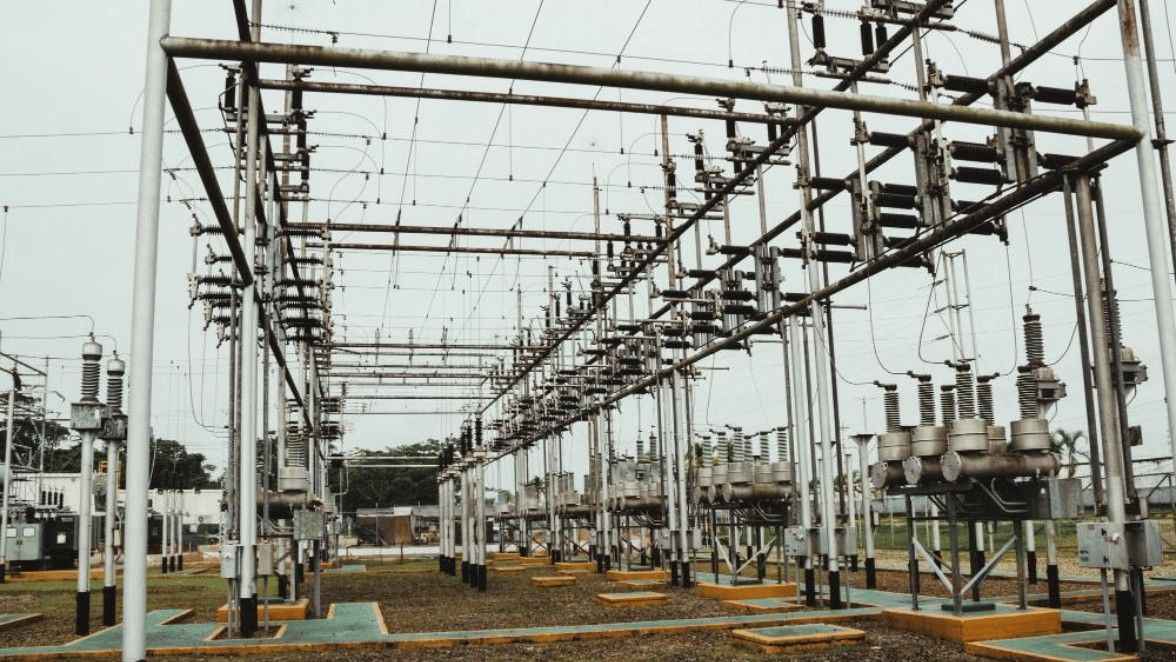
Most medium-to-large manufacturing facilities in India receive power at high tension (HT) (typically 11 kV or 33 kV) and step it down to low tension (LT) at 415V through in-house transformers. Substation design, bus configuration, and protection relay coordination are foundational to a reliable supply.
Power Factor Correction:
Industrial equipment can pull reactive power that degrades supply quality and increases energy bills. Automatic power factor correction (APFC) panels maintain the power factor close to unity, reducing distribution losses and avoiding utility penalties.
DG Sets and Backup Power:
For critical manufacturing processes, grid outages cannot be tolerated. Diesel generator (DG) sets sized appropriately for essential loads, along with automatic transfer switches, ensure continuity when utility supply fails.
Earthing and Lightning Protection:
Industrial facilities with sensitive electronics, automation systems, or hazardous environments require robust earthing infrastructure. Lightning protection design is also a statutory requirement under IS standards for certain building categories.
Building Management and Energy Monitoring Systems:
Increasingly, facilities integrate energy monitoring to track consumption at the zone or machine level for data-driven decisions on efficiency, peak load management, and cost reduction.
Is Your Facility Ready for Captive Solar?
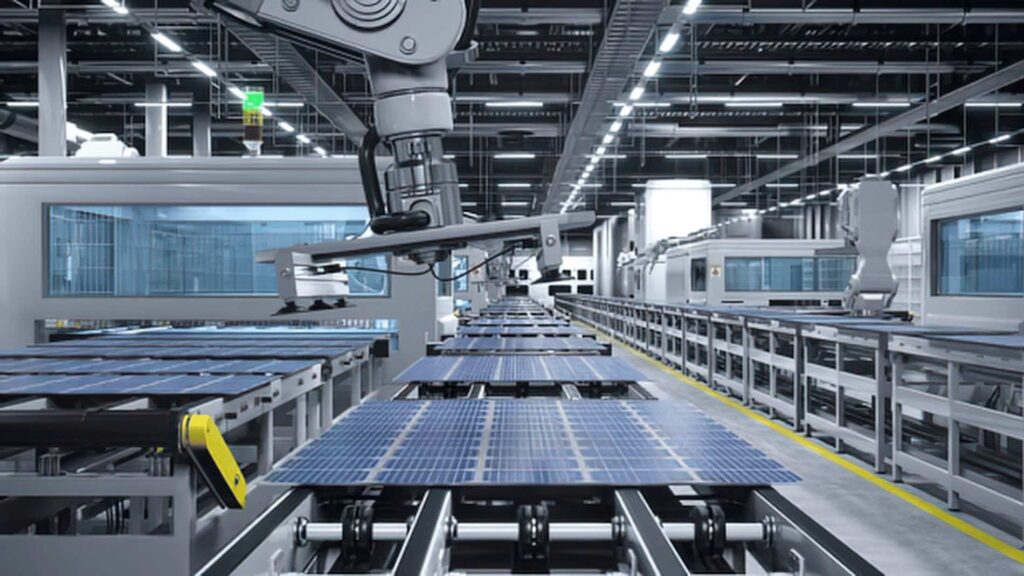
Power infrastructure planning in India today cannot be separated from the question of captive solar. Captive solar has firmly moved from being an alternative energy option to a strategic business decision for commercial and industrial consumers, driven by rising electricity costs and policy evolution
Grid electricity tariffs for high-tension industrial consumers across India now range from ₹8 to ₹12 per unit depending on state and sanctioned load — compared to solar generation costs that have dropped to ₹3–4 per unit for captive systems.
Industrial regions in Punjab, Haryana, Maharashtra, Gujarat, and Tamil Nadu are emerging as key markets for captive solar, driven by steep tariffs, state-level incentives, and environmental targets from export-focused firms.
Challenges for Solar Integration in Industrial Spaces
Integrating solar into a factory’s electrical system is not as straightforward as placing panels on the roof. Captive plants often involve custom engineering for uneven rooftops or constrained industrial spaces, integration with DG sets, batteries, or hybrid systems, and safety protocols aligned with industrial standards.
Facilities that plan for solar from the beginning can design their switchgear, earthing, and cable infrastructure to be solar-ready from day one, avoiding expensive retrofits later.
Building in Headroom for Future Expansion
One of the most common regrets among plant heads and facility managers is underestimating expansion. A facility that starts at 60% capacity will likely run at full capacity within three to five years. If the electrical infrastructure was not designed with that headroom, scaling becomes a capital problem.
Transformer spare capacity, additional feeder provisions, conduit routing for future cable additions, and space allocation in the main distribution board (MDB) for future circuits. These are small decisions at the design stage but significant cost-savers during expansion.
The same logic applies to automation and Industry 4.0 readiness. Modern manufacturing facilities increasingly run CNC machines, robotic arms, automated conveyor systems, and IoT-connected sensors. Each of these carries power quality requirements that a basic industrial supply may not meet without additional conditioning equipment.
Common Mistakes in Industrial Power Planning
Treating power design as a procurement exercise rather than an engineering one is the most common mistake. Buying the largest available transformer without a proper load study is not conservative design, it is inefficient capital deployment.
Similarly, neglecting power quality can have a serious impact on automation equipment and sensitive process instruments.
Locating substations and generator rooms without adequate access for maintenance is another recurring issue that creates operational headaches for years.
Conclusion
Industrial power infrastructure is not a commodity component. Decisions made during design are important for strong and scalable facilities.
VMS brings deep expertise in electrical and utility infrastructure design across industrial sectors from initial load studies to substation design, captive solar integration, and automation-ready power systems.
If you are planning a new facility or expanding an existing one, connect with our team to build your power infrastructure right from the start.