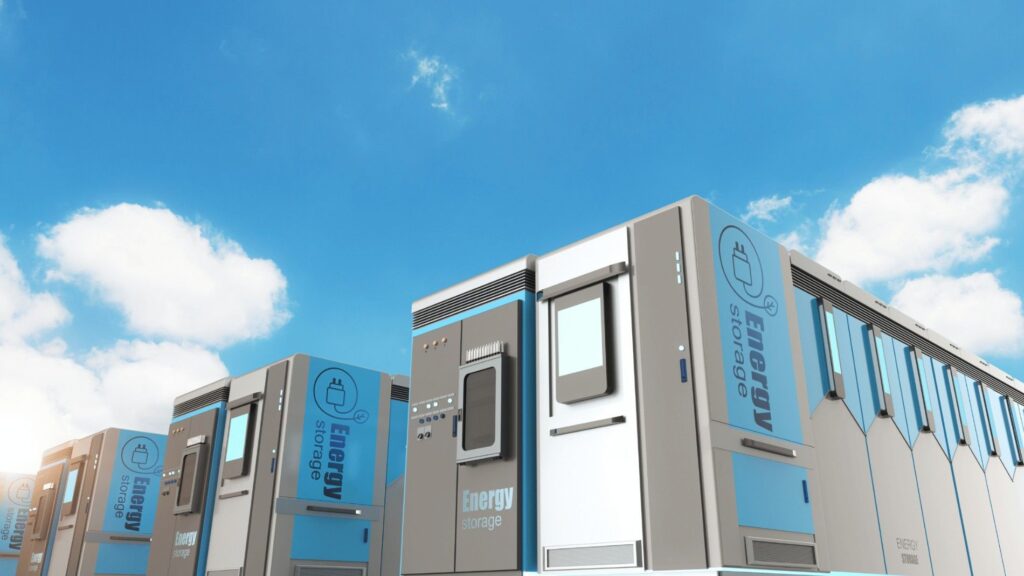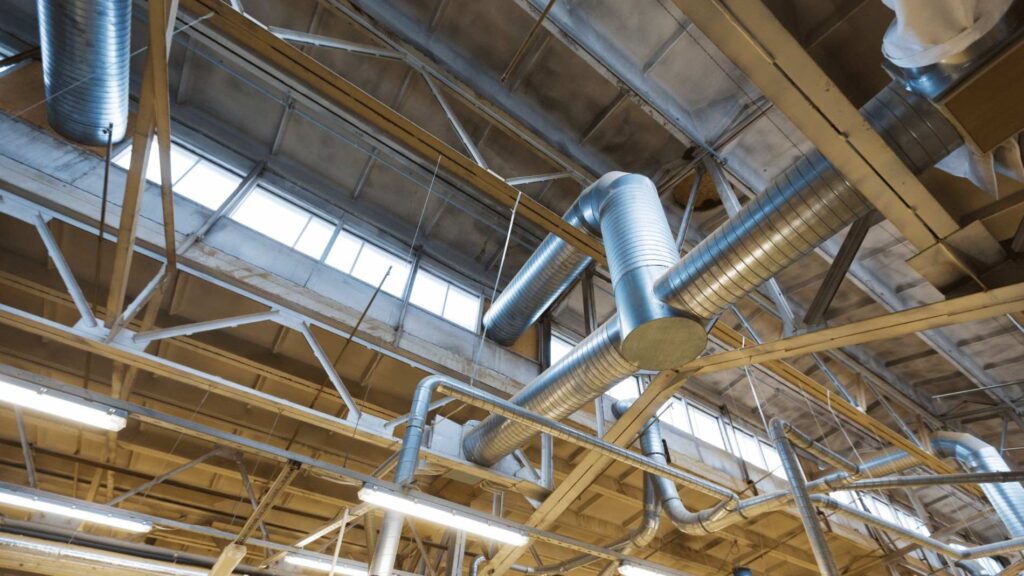
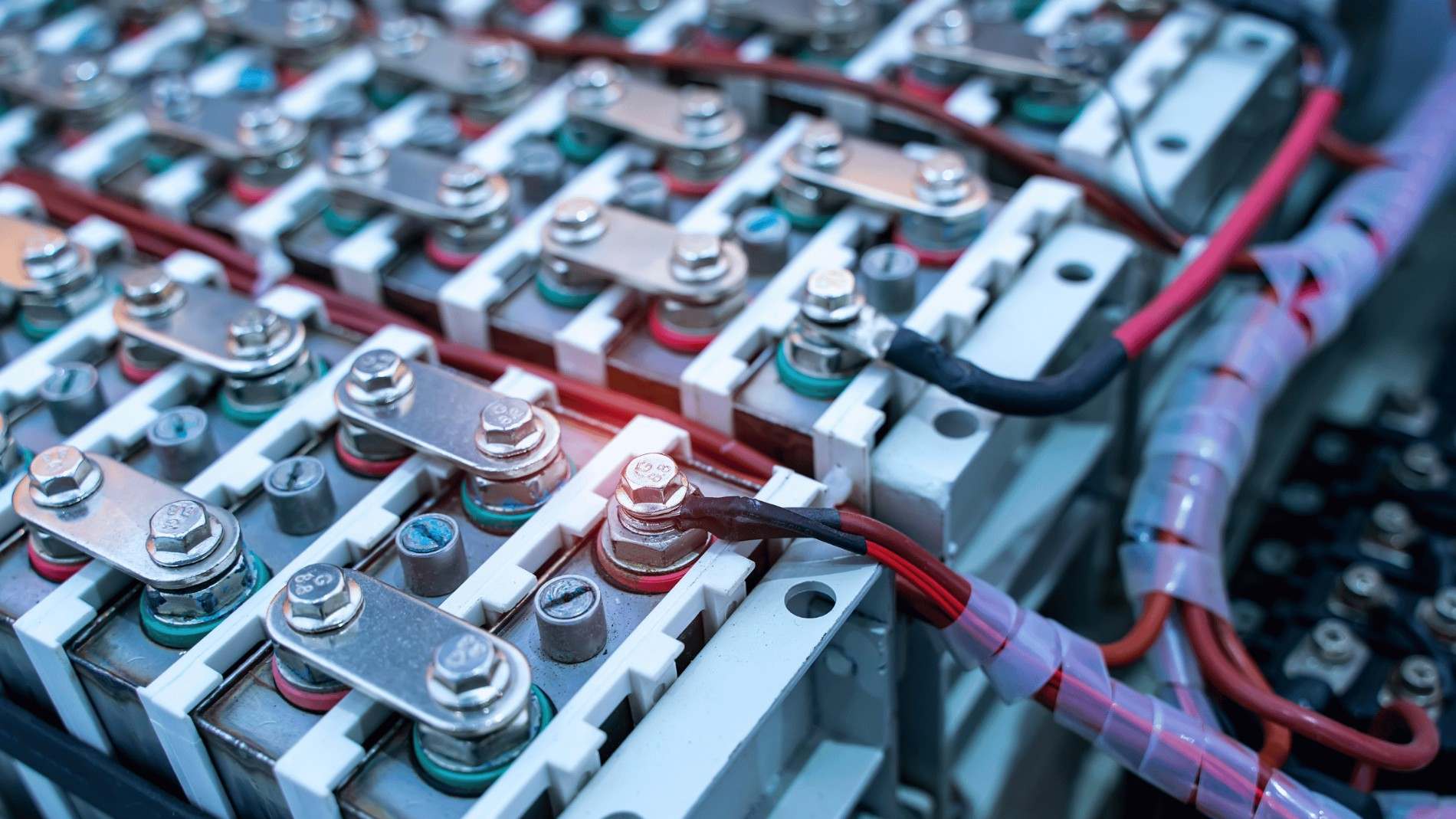
A warehouse storing lithium-ion batteries may appear similar to a conventional industrial storage facility. However, the risks associated with battery storage can be significantly different from those of ordinary manufactured goods.
Unlike conventional warehouse inventory, lithium-ion batteries contain stored electrical and chemical energy. Under certain failure conditions, they can generate substantial heat, release flammable gases, and experience thermal runaway. A fire involving stored batteries may also spread between neighboring units, depending on their chemistry, packaging, arrangement, and state of charge.
With growing demand from electric vehicles, renewable energy storage, electronics, and battery manufacturing, the need for specialized storage infrastructure is increasing.
For architects, engineers, and industrial developers, lithium-ion battery warehouse design requires careful consideration of fire protection, storage arrangements, ventilation, material handling, emergency access, and regulatory requirements.
This article explains how these factors influence warehouse planning and what project owners should evaluate before developing or modifying a facility for lithium-ion battery storage.
What Are the Key Risks Associated with Lithium-Ion Battery Storage
The first step in designing a battery storage warehouse is understanding the nature of the inventory.
Lithium-ion batteries vary considerably in size, chemistry, energy capacity, and application. A warehouse may store small cylindrical cells, battery modules, electric vehicle battery packs, or large industrial batteries.
These products do not necessarily present identical risks.
Why Is Thermal Runaway a Safety Concern in Battery Storage?
Thermal runaway occurs when heat generated within a battery cell triggers a self-sustaining sequence of chemical reactions.
It may result from internal defects, mechanical damage, overheating, electrical abuse, or other failure conditions. Once initiated, thermal runaway can release heat and flammable gases and, in some circumstances, propagate to nearby cells.
The consequences depend on several factors, including battery chemistry, cell construction, state of charge, packaging, and storage density.
Research-based guidance published by FM identifies thermal runaway and fire propagation as central concerns when planning lithium-ion battery manufacturing and storage facilities.
What Role Do Battery Chemistry and State of Charge Play in Battery Safety?
Lithium iron phosphate (LFP) and nickel manganese cobalt (NMC) batteries have different thermal characteristics and failure behavior. However, neither chemistry should automatically be considered free from fire risk.
The state of charge (SoC) is another important consideration. Higher charge levels can influence the severity of certain failure events, although the relationship depends on battery design and chemistry.
Warehouse operators should establish acceptable storage conditions based on manufacturer recommendations, product-specific hazard information, and the applicable fire protection strategy.
This is particularly relevant for facilities storing batteries from multiple manufacturers, where product characteristics and handling requirements may differ.
How Should Warehouse Layout and Storage Arrangements Be Planned?
The warehouse layout should be developed around the type, quantity, and movement of batteries rather than treating them as conventional packaged inventory.
Storage density, racking systems, aisle widths, and stacking heights can influence both operational efficiency and fire protection performance.
Storage Configuration and Separation Requirements
Lithium-ion batteries may be stored in palletized arrangements, solid piles, or industrial racking systems.
Each configuration presents different challenges for fire detection, sprinkler effectiveness, and access during an emergency.
For example, high-bay racking can increase storage capacity but may require additional fire protection measures. Closely packed batteries can also create difficulties in accessing affected inventory during an incident.
FM Property Loss Prevention Data Sheet 7-112, Lithium-Ion Battery Manufacturing and Storage, provides engineering guidance covering storage arrangements, packaging, state of charge, and sprinkler protection. Its April 2025 revision addresses, among other matters, protection arrangements for rack storage.
These recommendations should be evaluated against the actual storage conditions rather than applied as universal warehouse dimensions.
Separating Different Storage Categories
A battery warehouse may receive new batteries, returned products, damaged units, and batteries awaiting inspection.
These categories should not automatically share the same storage arrangement.
Damaged, swollen, overheating, leaking, or otherwise suspect batteries require a separate risk assessment and controlled handling procedure. Depending on the hazard, a dedicated quarantine area or an appropriately engineered external isolation arrangement may be necessary.
Charging, discharging, repair, and testing operations should also be assessed separately from passive storage because they introduce additional electrical and thermal hazards.
A practical design approach is to establish storage categories before finalizing the building layout, allowing the required separation and handling arrangements to be incorporated from the beginning.
How Can Fire Protection and Emergency Response Be Integrated into Warehouse Design?
Fire protection is one of the most important engineering considerations in lithium-ion battery warehouse design.
The objective is not limited to detecting fire. The design must also consider how an incident could develop, whether it could spread between stored batteries, and how emergency responders can safely access the facility.
Fire Detection and Suppression Systems
Automatic sprinkler systems may play an important role in controlling fire spread and cooling exposed materials. However, sprinkler design must account for battery characteristics, packaging, storage height, ceiling height, and racking configuration.
A conventional warehouse sprinkler arrangement should not be assumed suitable simply because it complies with general storage requirements.
Depending on the risk assessment, additional provisions may include thermal monitoring, smoke detection, gas detection, fire-rated separation, or specialized protection systems.
Early coordination with fire protection specialists, insurers, and the relevant approval authorities is essential, particularly for high-density storage facilities.
Ventilation and Gas Accumulation
During thermal runaway, lithium-ion batteries may release flammable and toxic gases.
In enclosed spaces, these gases can create additional hazards, including potential ignition or explosion under certain conditions.
Ventilation design should therefore consider credible gas-release scenarios, the building’s internal configuration, and the effectiveness of proposed exhaust arrangements.
Normal warehouse ventilation is not necessarily sufficient for emergency gas management. Where a hazard assessment identifies a credible gas accumulation risk, dedicated detection, ventilation, or explosion protection measures may be required.
Emergency Access and Firefighter Safety
Emergency response requirements should influence the architectural layout.
Fire tender access, approach roads, entry points, internal circulation, and access to fire protection equipment must be considered during site planning.
Warehouse operators should also maintain information on battery types, storage locations, maximum inventory, and known hazards.
Emergency procedures should address isolation of affected areas, evacuation, communication with emergency services, and the handling of damaged batteries after an incident.
The appropriate response strategy should be developed with qualified fire safety professionals and local emergency authorities.
What Are the Key Building Design, Utility and Environmental Requirements for Lithium-Ion Battery Storage?
While fire safety often receives the greatest attention, the building’s structural and mechanical design also affects battery storage safety.
A warehouse that meets general industrial building requirements may still require modifications to accommodate the characteristics of lithium-ion battery inventory.
Structural Design and Floor Loading
Battery packs and modules can be heavy, particularly when stored in large quantities.
Structural engineers should evaluate concentrated floor loads, rack loads, forklift movement, and the requirements of automated storage and retrieval systems.
The building should also accommodate suitable clear heights, equipment movement, and maintenance access without compromising the fire protection design.
Racking arrangements must be coordinated with sprinkler locations and required clearances. Future increases in storage height or density should trigger a review of the protection system.
Temperature and Humidity Control
Temperature can influence battery ageing, performance, and storage safety.
In Indian industrial locations, high summer temperatures and solar heat gain through roofs and walls can increase indoor warehouse temperatures, particularly in naturally ventilated buildings. The design should consider roof insulation, building orientation, ventilation, internal heat loads, and the manufacturer’s recommended storage conditions.
Air-conditioning may not be necessary for every battery warehouse. However, facilities storing temperature-sensitive products or operating in extreme climatic conditions may require mechanical cooling or more closely controlled environments.
Humidity control may also be relevant for preventing condensation, corrosion, and deterioration of packaging or electrical connections.
Electrical and Material Handling Infrastructure
Warehouse electrical systems should support safe lighting, material handling equipment, monitoring systems, and emergency operations.
Forklift charging stations, electrical panels, and maintenance areas should be positioned so that they do not introduce unnecessary ignition or operational hazards near battery inventory.
Where automated material handling systems are used, their electrical infrastructure, access requirements, and emergency shutdown arrangements should be coordinated with the overall warehouse design.
This coordination between architecture, structural engineering, electrical systems, HVAC, and fire protection is particularly relevant to multidisciplinary industrial facility planning undertaken by consultants such as VMS Consultants.
What Regulations and Safety Standards Apply to Lithium-Ion Battery Storage in India?
Battery storage facilities in India must consider the applicable building, fire safety, environmental, and occupational safety requirements.
The exact approvals depend on the state, local authority, warehouse use, battery inventory, and activities undertaken within the premises.
Applicable Codes and Standards
The National Building Code of India 2016 provides a model framework for building planning, fire and life safety, structural design, and building services. The legally applicable provisions depend on their adoption through state and local regulations.
International engineering references may also be useful.
For example, FM Data Sheet 7-112 specifically addresses lithium-ion battery manufacturing and storage, while NFPA 855, currently in its 2026 edition, primarily addresses the installation of stationary energy storage systems.
These standards have different scopes. A warehouse storing packaged batteries should not automatically be treated as an operating Battery Energy Storage System (BESS) installation.
International standards may be adopted as project or insurer requirements where appropriate, but they do not automatically replace mandatory Indian regulations.
Battery Waste Management Requirements
India’s Battery Waste Management Rules, 2022, with subsequent amendments, cover different battery categories and establish obligations for the environmentally sound management of waste batteries.
The framework includes Extended Producer Responsibility (EPR) requirements for relevant battery producers, as well as provisions concerning collection, recycling, and refurbishment.
For warehouse operators, the distinction between new inventory, returned batteries, and waste batteries is important.
Facilities handling waste batteries should assess applicable storage, handling, recordkeeping, and transfer requirements under the current regulatory framework.
Battery waste should not be treated as ordinary warehouse scrap.
Practical Checklist for Lithium-Ion Battery Warehouse Design
Before finalizing a new warehouse or converting an existing facility, project owners should review the following:
- Define the Inventory: Identify battery chemistry, product type, energy capacity, state of charge, packaging, and maximum expected storage quantities.
- Review Storage Arrangements: Evaluate racking, stacking heights, aisle widths, separation requirements, and the handling of different battery categories.
- Assess Fire Hazards: Develop a battery-specific fire risk assessment covering thermal runaway, fire propagation, gas release, and emergency response.
- Coordinate Building Systems: Verify structural loads, fire protection, ventilation, temperature control, electrical infrastructure, and emergency access.
- Plan for Abnormal Inventory: Provide procedures and suitable arrangements for damaged, defective, returned, or waste batteries.
- Confirm Compliance: Review applicable Indian regulations, local fire authority requirements, relevant technical standards, and insurer recommendations.
The checklist should be revisited whenever the facility changes its battery chemistry, storage configuration, inventory quantity, or operating activities.
Conclusion
Designing a safe lithium-ion battery warehouse requires a clear understanding of how battery characteristics influence storage conditions, fire hazards, building systems, and daily operations.
The most important decisions often begin before detailed engineering. Identifying the battery types, maximum inventory, storage configuration, and operational activities helps establish the appropriate design requirements.
A well-planned lithium-ion battery warehouse should support efficient storage and material movement while providing appropriate safeguards for personnel, property, and emergency responders.
VMS provides integrated industrial architecture and engineering consultancy services for manufacturing and industrial infrastructure projects. Connect with our team to discuss warehouse planning, multidisciplinary engineering, and fire safety considerations for specialized industrial storage facilities.
Frequently Asked Questions
1. What Are the Main Fire Safety Requirements for a Lithium-Ion Battery Warehouse?
The requirements depend on battery chemistry, storage quantities, state of charge, packaging, and storage configuration. Fire protection planning may include suitable sprinkler systems, detection, fire-rated separation, ventilation, emergency access, and dedicated arrangements for damaged batteries. The final design should follow a facility-specific risk assessment and applicable regulations.
2. Do Lithium-Ion Battery Warehouses Require Air-Conditioning?
Not all lithium-ion battery warehouses require air-conditioning. The need depends on manufacturer storage specifications, local climate, storage duration, and the facility’s ability to maintain suitable temperatures. In hot regions, roof insulation, ventilation, and mechanical cooling may need to be evaluated together.
3. Can Lithium-Ion Batteries Be Stored in Conventional Warehouse Racking?
They may be stored in suitable racking systems, but the arrangement must be assessed for battery hazards and fire protection requirements. Storage height, packaging, rack configuration, and sprinkler performance are important considerations. Existing racking should not be assumed suitable without reviewing these factors.
4. What Is the Difference Between a Battery Storage Warehouse and a BESS Facility?
A battery storage warehouse generally stores batteries as inventory before distribution, assembly, installation, or further processing. A BESS facility contains installed batteries connected to electrical equipment for storing and supplying energy. Their operating conditions, hazards, and applicable technical standards can therefore differ.